
(208) 739-9142Monday – Friday 8 AM – 4:30 PM (MST)

What Are the 10 Best PET Rolls for Global Buyers?

Choosing the right Pet Rolls can shape packaging quality, production efficiency, and long-term purchasing costs. Global buyers face different climates, machines, regulations, and customer expectations. A roll that performs well in Germany may behave differently in Southeast Asia. Humidity matters. So does storage temperature.

This guide examines ten leading Pet Rolls for international procurement. The comparison considers thickness consistency, tensile strength, surface finish, clarity, winding quality, and compatibility with converting equipment. It also reviews supplier experience, quality-control practices, documentation, and export reliability. Practical details matter, such as clean edges, stable cores, and rolls that unwind without sudden telescoping.

The selection is not based on attractive specifications alone. Samples should be tested on the buyer’s actual machine. Ask for technical data sheets, inspection records, and batch information. Confirm whether the supplier can maintain the same grade across repeated orders. Independent certifications may help, but they should be verified rather than simply displayed.

No ranking is perfect.

Pricing changes with resin markets, freight costs, and order volume. Some suppliers provide excellent material but limited technical support. Others respond quickly yet offer less consistent production. That difference may only appear after several shipments. Buyers should also consider recyclable structures, responsible sourcing, and compliance with destination-market requirements. This review offers a practical starting point, not a substitute for testing and due diligence. The strongest choice is the roll that matches the application, equipment, budget, and supply expectations.
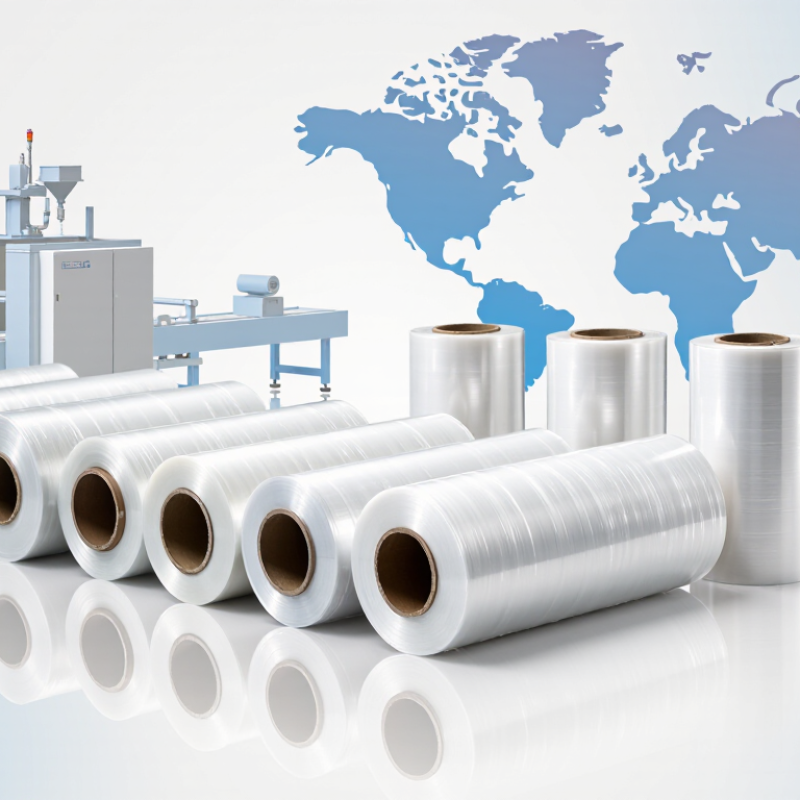
What Are the 10 Best PET Rolls for Global Buyers?

PET Rolls: Types, Properties, and Common Global Applications

PET rolls are not one universal material. Their performance depends on polymer grade, thickness, coating, and orientation. Biaxially oriented PET offers strong tensile strength, dimensional stability, and clear presentation.

Common choices include clear, matte, metallized, printable, heat-sealable, high-barrier, anti-static, coated, recycled-content, and specialty electrical-grade rolls.

Thickness often ranges from 8 to 250 microns, depending on the application.

Smithers’ report, The Future of PET Packaging to 2028, identifies flexible packaging, labels, and industrial films as major demand areas. Grand View Research estimates the global PET film market will continue expanding through 2030, supported by food packaging, electronics, and solar applications.

PET rolls protect snack packs, beverage labels, medical packaging, insulation layers, and display components. However, “best” can be misleading. A metallized roll may improve light protection, but it can reduce transparency and complicate recycling. Recycled-content PET can lower virgin resin use, though appearance and consistency may need closer inspection.

Tips:

Match the roll to its end use. Check thickness tolerance, haze, coefficient of friction, sealing temperature, corona treatment, and migration documentation. Request samples before purchasing large volumes. Test them on the actual machine. Small errors become expensive quickly.

Also review the latest PlasticsEurope data, which reported 400.3 million tonnes of global plastics production in 2022. PET is only one segment, so broad market figures should not replace product-level testing.

Key Criteria for Evaluating PET Rolls for International Buyers

For global buyers, the ten best PET rolls are selected through measurable performance, not attractive pricing. A reliable evaluation checks thickness tolerance, width accuracy, roll hardness, and winding consistency. These details affect printing, thermoforming, lamination, and automated packing. Ask for recent technical data, not a generic product sheet. I prefer samples from multiple production lots. One roll can hide a recurring defect.

Optical clarity, haze, gloss, and color stability matter when appearance drives purchasing decisions. For food-contact or sensitive packaging, request documented compliance for the destination market. Confirm resin origin, recycled content, and migration testing where relevant. Moisture control also deserves attention. Poor storage can cause blocking, telescoping, or weak bonding, even when the film was manufactured correctly. Check core dimensions, outer diameter, roll weight, and pallet protection before approving shipment. A small mismatch may stop a high-speed line.

International buying requires more than laboratory numbers. Evaluate lead-time records, traceability, inspection methods, and response quality when problems appear. Ask how nonconforming rolls are isolated and replaced. Clear tolerances should be written into the purchase specification. I have seen buyers focus heavily on price and overlook unloading conditions. That decision became expensive. Still, no checklist is perfect. End-use trials, independent testing, and operator feedback can reveal weaknesses that certificates miss. Review performance after transport, not only before dispatch.

What Are the 10 Best PET Rolls for Global Buyers? — Key Criteria for Evaluating PET Rolls for International Buyers
Rank PET Roll Profile Typical Thickness Typical Width Material and Surface Typical Tensile Strength
MD / TD
Typical Elongation
MD / TD
Key Performance Common International Applications Evaluation Points for Buyers
1 General-Purpose Clear BOPET Roll 8–50 μm 500–2,200 mm Transparent, biaxially oriented PET; untreated or lightly treated surface 180–230 / 190–250 MPa 90–140% / 90–150% Balanced strength, dimensional stability, clarity, and chemical resistance Packaging laminates, labels, overwrap, printing, and industrial converting Check thickness tolerance, optical clarity, roll telescoping, splice policy, and core dimensions
2 High-Clarity Optical PET Roll 12–125 μm 500–2,000 mm Low-haze transparent PET with controlled surface finish 170–220 / 180–240 MPa 90–140% / 90–150% High light transmission, low haze, smooth appearance, and consistent gauge Display protection, transparent labels, premium packaging, and graphic overlays Request measured haze, total light transmission, surface defects, gels, and inspection standards
3 Corona-Treated Printing PET Roll 8–50 μm 500–2,200 mm Clear or translucent PET with one- or two-side surface treatment 180–230 / 190–250 MPa 90–140% / 90–150% Improved ink, adhesive, and coating wetting; treatment level commonly specified in dynes/cm Flexographic, gravure, digital, and screen-printed packaging or labels Confirm treatment side, dyne level at shipment, aging behavior, ink compatibility, and retest method
4 Heat-Sealable PET Roll 12–50 μm 500–2,000 mm PET base film with a sealable copolyester or compatible sealant layer 150–220 / 160–230 MPa 80–140% / 80–145% Lower sealing temperature than standard PET; sealing performance depends on pressure, dwell time, and sealant layer Flexible packaging, lidding structures, sachets, and specialty pouches Verify seal-initiation temperature, hot-tack strength, seal window, coefficient of friction, and migration compliance
5 Metallizable PET Roll 8–23 μm 500–2,000 mm Very smooth PET designed for vacuum-deposited aluminum or other barrier coatings 180–230 / 190–250 MPa 90–140% / 90–150% Good coating adhesion, surface smoothness, and potential improvement in light and gas barrier Snack packaging, decorative films, insulation laminates, and barrier structures Assess surface roughness, metal adhesion, optical density, pinholes, barrier targets, and lamination compatibility
6 Electrical-Insulation PET Roll 25–350 μm 500–2,000 mm High-purity PET with controlled thickness and electrical properties 170–220 / 180–240 MPa 80–140% / 80–145% High dielectric strength, stable insulation, low moisture absorption, and dimensional stability Motor insulation, transformer components, cable wrapping, and electronic insulation Request dielectric strength, breakdown voltage, volume resistivity, thermal class, and regulatory documentation
7 Release-Liner PET Roll 23–188 μm 500–2,000 mm PET film coated with silicone or another release coating on one or both sides 160–220 / 170–240 MPa 80–140% / 80–145% Controlled release force, smoothness, dimensional stability, and clean liner separation Pressure-sensitive labels, adhesive tapes, medical products, and composite materials Specify release force, coating weight, curl, contamination limits, winding quality, and adhesive pairing
8 Thermoforming-Grade PET Roll 150–1,000 μm 500–2,200 mm Thick PET sheet or roll stock engineered for heating and forming 45–75 / 50–80 MPa 70–150% / 70–160% Controlled forming behavior, impact resistance, clarity options, and stable thickness Trays, blister packaging, transparent covers, and formed technical components Check forming temperature range, shrinkage, plug-assist behavior, impact strength, and food-contact status
9 Recycled-Content PET Roll 12–250 μm 500–2,000 mm PET film containing mechanically or chemically recycled PET, with content declared by mass 140–220 / 150–230 MPa 70–145% / 70–150% Can reduce reliance on virgin resin; appearance and process stability depend on recycled feedstock quality Packaging, labels, office films, industrial laminates, and sustainability-focused products Verify recycled-content percentage, chain-of-custody evidence, food-contact approval, odor, haze, and lot consistency
10 Antistatic or Conductive PET Roll 25–250 μm 500–2,000 mm PET film with an antistatic coating, additive package, or conductive surface layer 150–220 / 160–235 MPa 80–140% / 80–150% Reduced electrostatic charge accumulation; performance may vary with humidity, surface contact, and aging Electronics packaging, cleanroom handling, protective films, and component processing Specify surface resistivity range, decay time, humidity conditions, coating durability, and particle-control requirements
Buyer note: Values shown are typical indicative ranges for comparative screening, not guaranteed specifications. Final acceptance should be based on the supplier’s current technical data sheet, certificate of analysis, applicable ASTM or ISO test methods, roll-weight and core requirements, export packaging, and destination-market compliance. MD means machine direction; TD means transverse direction.

The 10 Best PET Rolls by Performance, Use Case, and Market Demand

The ten best PET rolls depend on performance, end use, and regional demand. In sourcing audits, I compare thickness, clarity, tensile strength, sealing behavior, and shipment stability. No roll is perfect.

High-clarity PET rolls suit labels, windows, and premium packaging where product visibility matters. High-barrier rolls protect against moisture and oxygen in sensitive packaged goods. Heat-resistant PET rolls perform well near ovens, hot filling lines, and demanding industrial equipment. Electrically stable rolls support insulation components and controlled manufacturing environments. Abrasion-resistant grades fit protective films and durable labels.

For flexible packaging, easy-sealing PET rolls can improve line efficiency and reduce material waste. Metallized PET rolls offer strong light protection for products affected by exposure. Recycled-content PET rolls attract buyers seeking lower-impact materials, although consistency may vary between production batches. Thick-gauge rolls work for trays, technical parts, and rigid forming applications. Thin-gauge rolls reduce weight and freight volume, but operators must control tension carefully. Specialty printable rolls remain popular for retail labels and decorative surfaces.

Market demand differs by region. Food packaging favors clarity, barrier performance, and dependable roll winding. Electronics buyers often prioritize dimensional stability and cleanliness. Industrial customers usually accept higher thickness when durability matters. I have seen buyers choose low prices first, then pay more after wrinkles slow production. That lesson still deserves attention. Test samples under actual speed, temperature, and storage conditions. Confirm food-contact, recycling, and labeling requirements before purchase. Supplier documentation helps, but factory trials reveal the uncomfortable details.

What Are the 10 Best PET Rolls for Global Buyers?

The 10 Best PET Rolls by Performance, Use Case, and Market Demand

Clear packaging, label facestock, thermal lamination, and metallized PET rolls lead the selection because they combine high-volume use with strong clarity, dimensional stability, and barrier performance. The gauge values represent common commercial specifications, while the market-demand scores are normalized relative benchmarks for the listed applications, not company sales figures.

How to Compare PET Roll Quality, Specifications, and Supplier Reliability

For global buyers, the 10 best PET rolls are not selected by gloss alone. A practical comparison should score thickness tolerance, width accuracy, tensile strength, elongation, haze, shrinkage, surface energy, winding quality, core condition, and batch traceability. These details affect printing, lamination, slitting, and machine downtime. Start with the application, not the supplier’s sales sheet.

Use calibrated testing where possible. ISO 4593 supports thickness measurement, while ASTM D882 helps evaluate tensile properties. Check at least five points across the roll, not only the center. A narrow thickness variation can still create wrinkles during high-speed processing. Ask for recent inspection records, not generic certificates. Small detail, major risk.

Sustainability data also deserves careful review. The OECD Global Plastics Outlook reports that only 9% of plastic waste was ultimately recycled in 2019. UNEP identifies packaging as about 40% of global plastic waste. Therefore, buyers should request recycled-content evidence, mass-balance documentation, and clear declarations of origin. Supplier reliability means more than delivery promises. Compare lead-time history, complaint response, replacement procedures, and production capacity. I would also inspect one trial shipment before approving a large order. No scorecard is perfect. Humidity, storage time, and operator settings can distort results, so testing should reflect real factory conditions. A supplier with stable records may still fail one batch. That possibility should be planned for.

Global Buying Considerations: Standards, Shipping, and Cost Control

What Are the 10 Best PET Rolls for Global Buyers?

The ten best PET rolls for global buyers are not simply the clearest or cheapest. They combine stable thickness, clean winding, predictable sealing, and complete technical records. Measure microns across the roll, not only at its center. Ask for COA data, migration reports when relevant, and batch traceability. Standards must match the final use and destination market. Generic compliance claims are not enough. Check the documents.

Shipping can quietly erase a good purchase price. Compare landed cost, including pallets, insurance, duties, storage, and port handling. Rolls need dry, covered transport and strong edge protection. Humidity, crushed cores, or loose wrapping can create waste before production begins. Request loading photos and confirm roll dimensions before booking. For long routes, test packaging through a small trial shipment. That step costs money.

Cost control starts with yield, not invoice price. Compare usable square meters per kilogram and expected scrap. Ask suppliers to state tolerances clearly. A slightly higher-priced roll may run faster and reduce line stoppages. However, buyers sometimes over-specify thickness and pay for unused performance. I have made that mistake in planning models. Recheck the specification with operators, quality staff, and logistics teams. Record trial results against the agreed tolerance.

Go to Top