Best Smart Proof Books to Enhance Your Learning Experience?
In today’s digital age, learning can sometimes feel overwhelming. The abundance of information makes it challenging to focus. Smart Proof Books offer a unique solution. They are designed to enhance your reading experience and make learning more efficient.
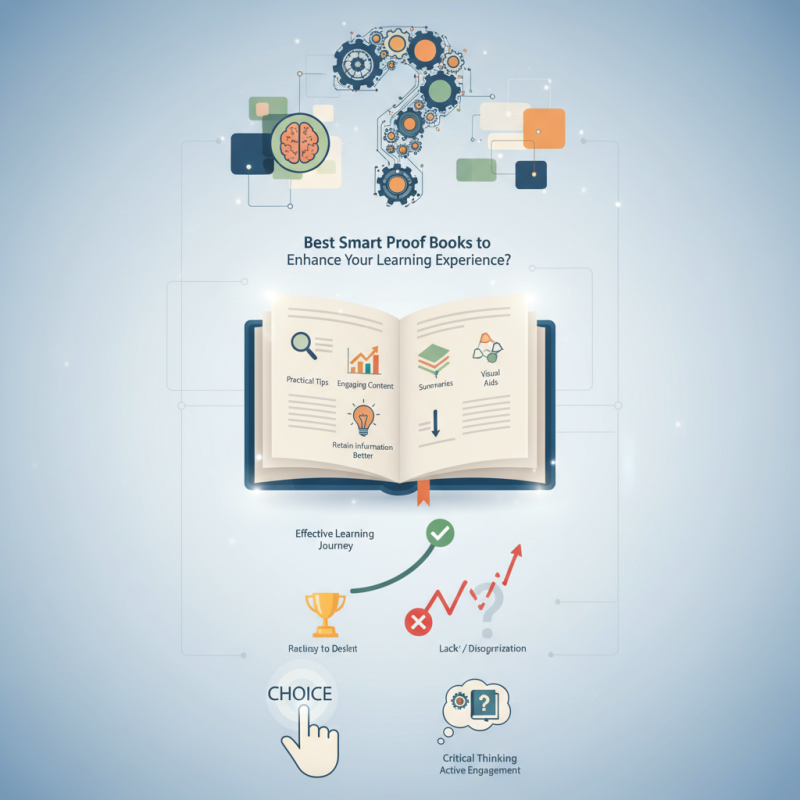
These books combine practical tips with engaging content. They guide readers to retain information better. Features like summaries and visual aids help simplify complex ideas. However, not all Smart Proof Books live up to their promises. Some may lack depth or clear organization. It's essential to choose wisely.
Using these books can change your approach to learning. They are meant to support your journey, but not replace critical thinking. Emphasizing active engagement is key. As you explore Smart Proof Books, reflect on what works best for you. Be open to discovering new insights and strategies.
Overview of Smart Proof Books and Their Benefits
Smart proof books are innovative tools that can help enhance your learning experience. They often incorporate cognitive science principles to create engaging and effective study methods. These books may include interactive elements, thought-provoking questions, and real-world applications. Such features encourage active learning, which is proven to boost retention and understanding of material.
Many learners struggle with traditional study methods. They may find it hard to stay focused or they might forget key concepts quickly. Smart proof books address these common issues. They foster an environment for self-reflection and deep thinking while making learning enjoyable. Imagine flipping through a book that not only presents facts but also challenges your thinking with engaging activities. It feels different.
Moreover, these books often provide feedback mechanisms. Readers can assess their understanding instantly. Errors become learning opportunities instead of setbacks. This approach fosters a growth mindset, encouraging readers to embrace challenges. It’s a journey of exploration and improvement, not just rote memorization. Each chapter can reveal new insights, making learning a dynamic experience.
Criteria for Selecting Effective Learning Resources
When choosing effective learning resources, it’s essential to focus on how they enhance your understanding. Consider the type of content that truly engages you. Look for materials that challenge your thoughts and expand your perspectives. The best resources encourage questions and promote critical thinking.
Tips: Pay attention to the format. Some learners thrive with visual aids, while others prefer written texts. Incorporate a blend of both to see what works best for you.
Assess the credibility of the sources. Not everything labeled as educational is true. Reading reviews and checking the author's background can help. Sometimes, what seems interesting lacks depth. Don't hesitate to explore multiple viewpoints to gain a well-rounded understanding.
Tips: Break your study sessions into small chunks. This approach helps prevent burnout. Reflect on what you've learned after each session. Adjust your strategies based on what seems less effective. Learning is an ongoing process, and adaptation is key.
Top Recommended Smart Proof Books for Various Subjects
In the quest for knowledge, selecting the right books can greatly enhance your learning experience. Research indicates that active engagement with material can improve retention rates by 60%. Smart proof books encourage this engagement by incorporating interactive elements and multidimensional learning approaches. They appeal to various subjects, ensuring there's a fit for every learner.
For instance, in the field of science, books with real-life applications make concepts tangible. A recent study showed that students who utilized such resources scored 15% higher in practical assessments. In math and statistics, visual aids can clarify complex ideas, bridging gaps that traditional methods may leave. These techniques resonate well, although some learners still find it challenging to adapt their thinking.
Language learning can also benefit from smart proof strategies. Immersive texts and audio-visual components create an engaging environment. This integration can sometimes overwhelm beginners, highlighting the need for gradual exposure. It's essential to reflect on your personal learning style and choose books that align with your needs. Finding the right balance often transforms knowledge absorption from a daunting task into an exciting adventure.
Best Smart Proof Books to Enhance Your Learning Experience
| Title | Author | Subject | Focus Area | Description |
| Thinking, Fast and Slow | Daniel Kahneman | Psychology | Cognitive Bias | Explores dual systems of thinking. |
| Deep Work | Cal Newport | Productivity | Focus and Distraction | Strategies for deep focus in a distracted world. |
| The Power of Habit | Charles Duhigg | Self-Improvement | Habit Formation | Examines the science behind habit formation. |
| Educated | Tara Westover | Memoir | Personal Growth | A memoir about self-education and resilience. |
| Sapiens: A Brief History of Humankind | Yuval Noah Harari | History | Human Development | An exploration of the history of our species. |
How to Integrate Smart Proof Books into Your Study Routine
Integrating smart proof books into your study routine can transform the way you learn. Start by setting clear goals. What subjects need more attention? Create a reading schedule that fits your life. Aiming for consistency is key. Regularly reading these materials can deepen your understanding. Break the content into manageable sections. Focus on one topic at a time.
Next, consider taking notes that capture your thoughts. Write down questions as they arise. This reflection process enhances retention. You might even sketch ideas or concepts. Visual aids can make tricky topics easier to grasp. Don’t hesitate to revisit difficult sections multiple times. Repetition, though sometimes tiresome, can cement knowledge.
Stay flexible. Some days you won't feel motivated. That's normal. Adjust your routine when needed. Explore different formats, too. Audiobooks and digital resources can supplement your reading. These alternatives might provide fresh perspectives. The journey of learning is often messy, filled with challenges. Embrace the imperfections, and celebrate small breakthroughs as you go.
Tips for Maximizing Learning with Smart Proof Materials
To maximize your learning with smart proof materials, engage actively with the content. Skim through the chapters first. Identify key themes and ideas that resonate with you. This initial approach sets a foundation, allowing you to focus your attention later. As you delve deeper, take notes that summarize main points. Keep your notes organized, using bullet points for clarity. This creates a visual cue for review.
Incorporating varied learning methods can enhance retention. Pair reading with other forms of media. For instance, visual aids, videos, or podcasts can reinforce your understanding. Don’t hesitate to return to complex sections. Sometimes, a second or third reading reveals nuances missed initially. Joining discussions or study groups can also enrich your experience. Peers can offer fresh perspectives that challenge your understanding.
However, learning isn't always linear. Some materials might feel overwhelming. You may find certain concepts hard to grasp. This is normal; it’s part of the process. Embrace difficulties as opportunities. Reflect on your confusion, and seek out additional resources. Over time, this approach will enhance your comprehension. Such experiences foster both growth and resilience in your learning journey.
Best Smart Proof Books and Their Effectiveness in Enhancing Learning