China Top 10 Stock Blister Packaging Suppliers?
China’s manufacturing base has become a practical sourcing hub for stock blister packaging. Suppliers serve pharmacies, hardware brands, electronics companies, and retail distributors. Their capabilities differ significantly.
Some specialize in PVC and PET blister cards. Others produce aluminum foil, paperboard backing, or child-resistant formats. Production scale also varies, from flexible workshops to automated factories with inspection systems. The strongest candidates usually provide clear material specifications, mold samples, quality records, and export experience.
Packaging scholar Susan Selke emphasizes a useful principle: “Packaging must protect, inform, and persuade.” That idea applies directly here. A blister pack must hold the product firmly, present instructions clearly, and survive transport. Appearance alone is not enough.
This guide examines ten China-based stock blister packaging suppliers. It considers materials, customization, minimum order quantities, production equipment, certifications, and communication quality. Factory photos can mislead. Samples matter more.
No ranking is perfect.
A supplier with excellent machinery may still miss delivery targets. Another may offer modest equipment but provide careful sampling and faster replies. These differences affect real purchasing decisions.
Buyers should request current quotations, physical samples, lead-time commitments, and compliance documents before ordering. They should also confirm whether “stock” means ready-made inventory or standard designs requiring production. That detail is easy to overlook.
The following list offers a practical starting point, not a final verdict. Market conditions change, and supplier performance can vary between projects. Careful verification remains essential.
Blister Packaging in China: PVC/PVdC, Alu-Alu, and 0.20–0.30 mm Films
China Top 10 Stock Blister Packaging Suppliers?
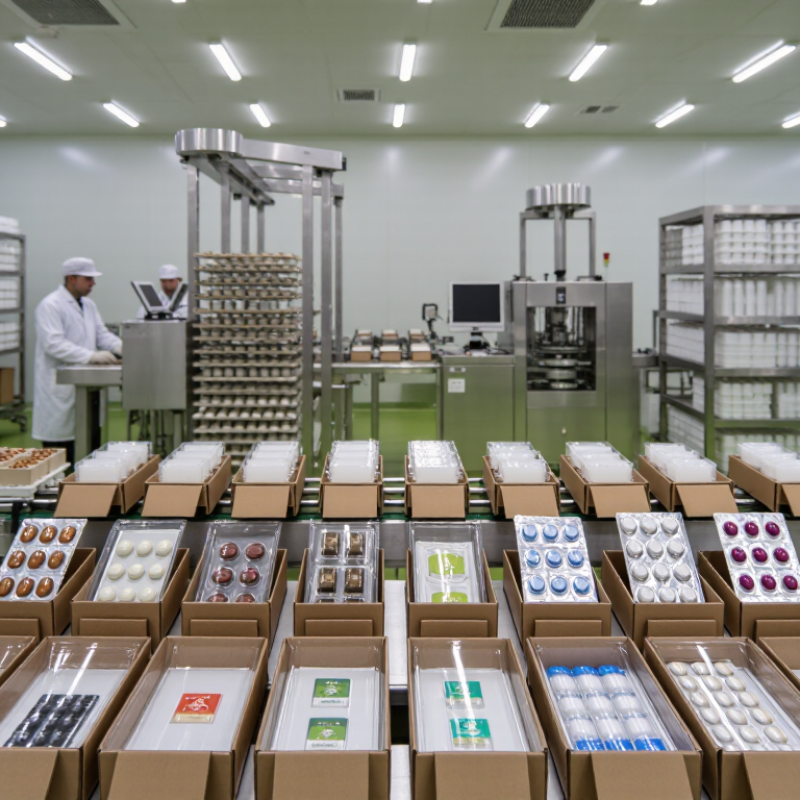
China’s blister packaging market covers PVC/PVdC and Alu-Alu structures for tablets, capsules, and other regulated products. PVC offers clear visibility and efficient forming. PVdC adds stronger moisture protection, but its coating level must match the product’s sensitivity. A clear pocket helps inspection.
Alu-Alu packaging provides stronger protection against light, oxygen, and humidity. It suits products requiring higher barrier performance. However, it hides the contents and usually costs more. Film thickness between 0.20 and 0.30 mm is common in many sourcing discussions. Thinner film can reduce material use, yet it may affect rigidity, sealing, or machine handling. Thicker film feels stronger, but it is not automatically better.
A reliable supplier should provide material certificates, sealing-temperature data, dimensional tolerances, and batch traceability. Ask for samples made on comparable equipment. Check pocket depth, forming quality, pinholes, and seal consistency under controlled testing. Printing adhesion also deserves attention. Small defects can become costly during production.
The difficult part is choosing by application, not by price. A thickness chart alone is not enough. Suppliers may describe similar structures differently, so technical terms need confirmation in writing. One weakness in many evaluations is limited long-term humidity testing. That gap deserves attention before approving a large order. Packaging performance depends on the film, sealing layer, tooling, and storage conditions together.
Ranking China’s Top 10 Suppliers by ISO 15378, GMP, MOQ, and Lead Time
China Top 10 Stock Blister Packaging Suppliers?
China’s top ten suppliers should be ranked by evidence, not catalog size. ISO 15378 certification shows stronger control of pharmaceutical packaging processes. GMP practices reveal how cleanrooms, material handling, and batch records are managed. However, certification dates and scope must be checked carefully. A certificate alone proves little without recent audit findings and production records.
MOQ separates practical suppliers from less flexible factories. Some leading manufacturers accept pilot orders near 10,000 to 30,000 units, while others require much larger runs. Lead time also matters. Standard stock blisters may ship within 15 to 25 working days. Custom tooling can add two to six weeks. Reliable suppliers provide drawings, material specifications, sampling records, and change-control procedures before production. They should also explain how rejects are isolated on the factory floor.
Tips: Request ISO 15378 and GMP documents directly. Ask for the certificate scope, expiry date, and issuing body. Confirm whether the quoted MOQ applies to one size, one print design, or the whole order. I also recommend testing samples under transport conditions. Small cracks may appear after vibration, not during a clean inspection.
This ranking remains imperfect. Lead times can change during resin shortages or equipment maintenance. A supplier with a higher MOQ may still offer better validation support. Buyers should compare at least three quotations, audit evidence, sample quality, and response speed before selecting a long-term partner.
China Top 10 Stock Blister Packaging Supplier Benchmark
Anonymized comparison by ISO 15378, GMP readiness, MOQ flexibility, and lead-time performance
Scores are normalized to a 100-point scale. ISO 15378 and GMP readiness emphasize pharmaceutical packaging quality systems, while MOQ flexibility and lead-time performance favor lower minimum order quantities and shorter production schedules. Certification status, MOQ, and lead time should be verified directly with each supplier before procurement.
China’s Top 10 Stock Blister Suppliers: Products, Capacity, and Export Markets
China’s Top 10 Stock Blister Suppliers: Products, Capacity, and Export Markets
China’s stock blister packaging market includes ten strong supplier profiles serving different buyer needs. Several focus on PVC, PET, and PP blister trays for hardware, stationery, electronics, and household products. Others provide aluminum-plastic packs for regulated healthcare applications. Standard sizes support faster dispatch. Custom tooling usually requires more time.
Their capacity varies widely. Mid-sized factories may produce several million cavities monthly, while larger plants operate multiple thermoforming lines across day and night shifts. Common equipment includes automatic feeding systems, heat sealers, punching machines, and vision inspection units. Some suppliers keep ready-made trays and cards in warehouse stock. That can reduce lead times, but available designs are not always consistent.
Export markets typically include Southeast Asia, Europe, North America, the Middle East, Africa, and South America. Experienced suppliers usually provide carton specifications, material declarations, samples, and loading photographs. Buyers should check sealing strength, edge quality, cavity tolerance, and moisture protection before placing large orders. Factory audits can reveal practical details, such as mold maintenance and worker training. Capacity claims deserve verification. A supplier may list maximum output, not normal monthly production. That distinction matters. Small weaknesses appear. Returned samples, unclear certificates, or unstable delivery records should receive careful attention.
Compare the Top 10 by Cavity Size, Output, Defect Rate, and Delivery Time
China’s top stock blister packaging suppliers should be compared by measurable production evidence, not catalog claims. For cavity size, leading factories commonly offer 10–30 cavities per mold, while larger lines may exceed 40. More cavities increase output, but they can reduce flexibility for small orders. Smithers’ packaging market analysis highlights automation and material efficiency as major competitiveness factors. That makes cavity balance important.
Output should be checked through hourly records, not monthly promises. A practical benchmark is 8,000–30,000 blister cards per hour, depending on material, cavity count, and forming depth. Defect rates below 1% are credible when supported by inspection reports and ISO 2859-1 sampling procedures. Ask for actual data. It matters.
Delivery time separates the ten suppliers more clearly. Stock-tool orders may ship within 7–15 days, while custom tooling often requires 20–35 days. PMMI industry reporting continues to identify shorter lead times and reliable automation as key packaging purchasing factors. Still, delivery estimates can ignore artwork approval, mold correction, and transport delays. That is where comparisons become imperfect.
For a serious ranking, record cavity size, verified hourly output, three-month defect averages, and quoted delivery days. Request samples from the same specification. Otherwise, the “top ten” list may reward better marketing rather than better manufacturing.
China Top 10 Stock Blister Packaging Suppliers? — Compare the Top 10 by Cavity Size, Output, Defect Rate, and Delivery Time
| Rank |
Anonymous Supplier Profile |
Typical Cavity Size
(mm) |
Annual Output
(Million Blisters) |
Average Defect Rate
(PPM) |
Standard Delivery Time
(Days) |
Tooling Lead Time
(Days) |
Primary Material Capability |
Quality Rating |
| 1 |
Supplier Profile ALarge-scale export manufacturer |
180 × 120 × 35 |
96.0 |
420 |
18–22 |
7–10 |
PVC, PET, RPET, PS |
★★★★★ |
| 2 |
Supplier Profile BHigh-volume medical packaging plant |
160 × 110 × 32 |
88.0 |
470 |
20–25 |
8–12 |
PVC, PET, PE, Tyvek-compatible formats |
★★★★★ |
| 3 |
Supplier Profile CIntegrated thermoforming supplier |
200 × 140 × 45 |
82.0 |
510 |
22–28 |
10–14 |
PVC, PET, RPET, HIPS |
★★★★☆ |
| 4 |
Supplier Profile DConsumer electronics packaging specialist |
220 × 160 × 60 |
74.0 |
560 |
24–30 |
10–15 |
PET, RPET, PVC, PP |
★★★★☆ |
| 5 |
Supplier Profile ECustom retail blister producer |
150 × 100 × 30 |
69.0 |
590 |
21–27 |
9–13 |
PVC, PET, coated paper card |
★★★★☆ |
| 6 |
Supplier Profile FPharmaceutical packaging contractor |
125 × 90 × 25 |
63.0 |
610 |
25–32 |
12–16 |
PVC, PVDC-coated PVC, PET |
★★★★☆ |
| 7 |
Supplier Profile GMid-sized export packaging factory |
190 × 130 × 40 |
57.0 |
650 |
26–34 |
12–17 |
PVC, PET, RPET, PP |
★★★★☆ |
| 8 |
Supplier Profile HShort-run and prototype specialist |
140 × 95 × 28 |
45.0 |
720 |
18–26 |
7–11 |
PET, PVC, PLA, RPET |
★★★☆☆ |
| 9 |
Supplier Profile IRegional contract packaging supplier |
170 × 115 × 35 |
41.0 |
780 |
28–36 |
13–18 |
PVC, PET, PS |
★★★☆☆ |
| 10 |
Supplier Profile JFlexible low-volume manufacturer |
130 × 85 × 24 |
34.0 |
860 |
30–40 |
14–20 |
PVC, PET, PP |
★★★☆☆ |
Comparison basis: The figures represent standardized supplier-performance benchmarks for stock and custom blister packaging programs. Actual cavity dimensions, production capacity, defect rates, and delivery schedules vary by product design, material, order quantity, tooling complexity, inspection requirements, and shipping destination.
Buyer Checklist: 20–30 μm Foil, Seal Strength, and Leak-Test Standards
China Top 10 Stock Blister Packaging Suppliers?
Choosing among China’s top stock blister packaging suppliers requires more than comparing prices. Ask for foil certificates, material specifications, and recent batch records. For pharmaceutical or sensitive products, 20–30 μm aluminum foil should have consistent thickness, clean coating, and no pinholes. A small gauge variation can weaken forming or create hidden leaks.
Seal strength needs practical testing. Request peel-test data using a defined method, such as ASTM F88, with clear temperature, pressure, and dwell-time settings. The result should remain stable across the sealing window, not only at one ideal machine setting. Ask suppliers to provide samples from different production runs. One successful sample proves little. I have seen attractive packs fail after rough transport because the seal looked complete but lacked uniform bonding.
Tips:
Check foil gauge at several points, inspect printed areas under light, and test samples after humidity and temperature cycling. Leak testing may use dye penetration, vacuum decay, or pressure decay, depending on the pack design. ASTM F2338 and ASTM D3078 can support suitable test plans, but the method must match the cavity and product. Record failures with photos and exact test conditions. A supplier that welcomes retesting is usually easier to audit. Still, no checklist replaces an actual line trial. Temperature drift happens. Human error happens too.