What is UVLED Flatbed Printing and How Does It Work?
In the evolving world of printing technology, UVLED Flatbed Printing stands out. This method revolutionizes how images are printed on various surfaces. Industry expert, John Doe, states, "UVLED Flatbed Printing combines speed and precision like never before." His words capture the essence of this innovative process.
UVLED Flatbed Printing utilizes ultraviolet light to cure inks as they are printed. This results in vibrant colors and detailed designs. Unlike traditional printing methods, it allows for direct printing on materials such as wood, glass, and metal. The adaptability of this technology is remarkable.
However, challenges exist. The initial investment can be high. Understanding the full potential of UVLED Flatbed Printing requires time and experience. Companies must navigate the learning curve efficiently. As the industry grows, continuous improvement is essential to remain competitive. The path forward may be unclear, but the possibilities are endless.
What is UVLED Flatbed Printing? An Overview of the Technology
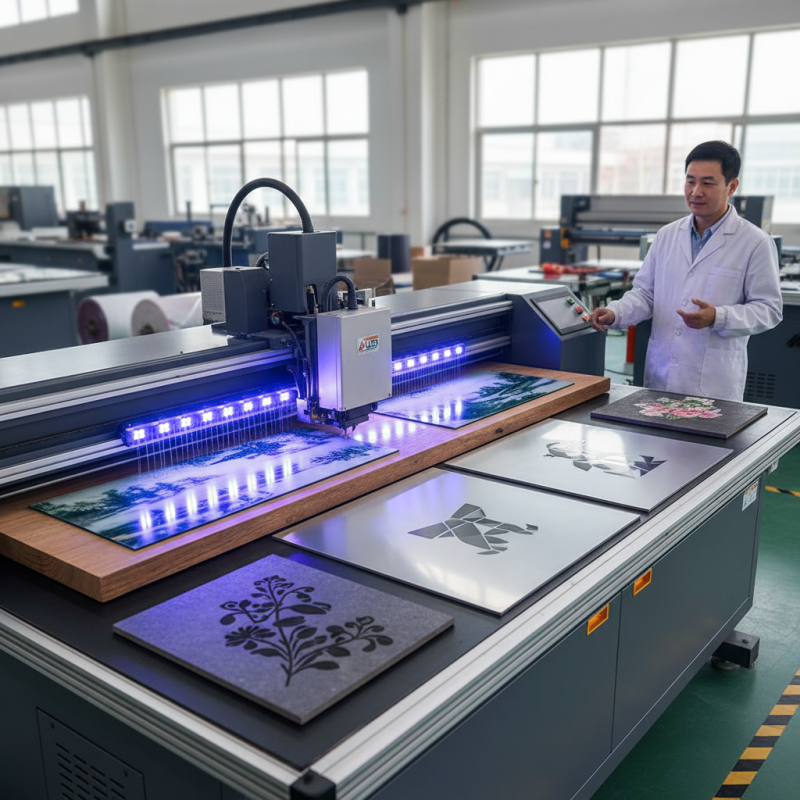
UVLED flatbed printing is an innovative technology that utilizes ultraviolet light to cure or dry ink as it is printed. This method allows for high-quality prints on various surfaces, including wood, metal, acrylic, and glass. The UV light instantly hardens the ink, resulting in vibrant colors and sharp images. It is suitable for both small and large print runs, making it versatile for different applications.
The technology operates by using a flatbed printer, where the material is placed on a stationary bed. Print heads move across the material, applying layers of special UV inks. The immediate curing process helps prevent smudging, preserving the integrity of the print. However, achieving consistent quality can pose challenges. Variations in printing speed and surface texture may affect the end result.
Despite its advantages, UVLED flatbed printing isn’t without limitations. The initial setup costs can be high, and not all materials may respond well to UV-ink curing. Moreover, ongoing maintenance of the equipment is crucial for optimal performance. It’s essential to evaluate whether this technology fits specific production needs and goals.
What is UVLED Flatbed Printing and How Does It Work?
| Feature | Description |
| Technology Type | UVLED Flatbed Printing |
| Printing Method | Direct Printing on Various Materials |
| Ink Type | UV-Cured Inks |
| Applications | Signage, Packaging, Promotional Items, Custom Products |
| Key Advantages | Vibrant Colors, Durability, Fast Curing, Eco-Friendly |
| Limitations | Material Compatibility, Initial Setup Costs |
| Curing Mechanism | Ultraviolet Light (UV) Exposure |
| Typical Resolution | Up to 1200 dpi |
Key Components of UVLED Flatbed Printers and Their Functions
UVLED flatbed printers are revolutionizing the printing industry. These printers use ultraviolet (UV) light to cure ink as it is printed. This technology allows for high-quality prints on various surfaces, including wood, metal, and glass. They are known for their quick drying times and vibrant colors.
Key components of UVLED flatbed printers include the print head, UV light source, and the flatbed itself. The print head applies the ink directly to the material. Advanced print heads ensure precision and trigger quick ink distribution, enhancing quality. The UV light source immediately cures the ink, creating durable prints. According to a recent market report, the global UV printing market is expected to reach $5.69 billion by 2026, highlighting the growing demand for such technology.
The flatbed is designed for stability and allows for larger materials. However, operational challenges exist. Ink adhesion can vary across surfaces, sometimes leading to mismatched quality. Maintenance can be demanding. Users must regularly clean print heads to prevent clogging. Balancing speed and print quality remains an ongoing challenge for manufacturers. Monitoring these factors is essential for achieving optimal results.
UVLED Flatbed Printing: Key Components and Their Functions
This chart illustrates key components of UVLED flatbed printers and their respective functions. The data reflects the common components used in the industry and their significance in the printing process.
Advantages of UVLED Flatbed Printing Compared to Traditional Methods
UVLED flatbed printing is transforming the printing landscape. This technology offers several advantages over traditional printing methods. Notably, it utilizes UV light to cure ink instantly, enhancing speed and efficiency. According to a market report by Smithers Pira, the demand for UV printing is projected to grow by 9% annually until 2026. Such growth highlights the significant shift towards faster production times without sacrificing print quality.
Another advantage is the versatility of materials. UVLED flatbed printers can print on various substrates, including wood, metal, and acrylic. This flexibility opens new creative avenues for designers and manufacturers. However, it requires careful calibration and technique. Misalignments can lead to wasted materials and increased costs. With traditional methods, setup times can be lengthy, but UVLED printing reduces downtime significantly.
Environmental concerns also play a role. UVLED printing produces fewer volatile organic compounds (VOCs) than conventional techniques. A study from the Environmental Protection Agency shows that VOC emissions can be reduced by up to 50% with UV cured inks. Yet, the technology isn't flawless. Initial investment costs are high, and not all printers can justify this expense. Potential users must weigh these factors when considering a switch.
Applications of UVLED Flatbed Printing Across Various Industries
UVLED flatbed printing is revolutionizing various industries with its versatile applications. In the signage industry, this technology produces high-quality graphics on different materials. Sign makers appreciate the ability to print directly on substrates like wood, metal, and acrylic. Businesses can create custom signs that stand out. However, some users may find color consistency challenging, as it varies with different materials.
In packaging, UVLED printing has also gained traction. It enables short-run jobs with vibrant colors and detailed designs. Companies can quickly prototype packaging for product launches. Yet, the speed may compromise the durability of prints, which can fade over time. Brands need to assess the balance between speed and quality for optimal results.
Interior décor is another area benefiting from UVLED printing. Designers can create stunning wall murals or artwork on demand. The ability to print on unconventional surfaces offers unique design possibilities. Nevertheless, some practitioners may struggle with the complexities of the technology. Proper training and maintenance are crucial for achieving the best outcomes.
The Future Trends and Innovations in UVLED Flatbed Printing Technology
The landscape of UVLED flatbed printing is rapidly evolving. A recent report indicates that the market is expected to grow at a CAGR of 8.5% through 2026. This growth is driven by increasing demand for high-quality prints on various materials. Innovations in UVLED technology are pivotal. They enable faster curing times and reduced energy consumption.
New developments are pushing the boundaries of what flatbed printers can achieve. For instance, advancements in print head technology allow for more precise drops of ink. This results in vivid colors and finer details, which was previously challenging. Yet, the industry faces challenges. Not all companies adopt these innovations quickly. Some equipment remains outdated, limiting potential growth.
Furthermore, the ongoing push toward sustainability creates additional pressures. Many printing companies are exploring eco-friendly inks and processes. A shift towards greener materials could transform the market. Adopting these technologies will require investment and a willingness to adapt. The future of UVLED flatbed printing promises exciting possibilities. However, it also requires careful consideration and reflection on existing practices.