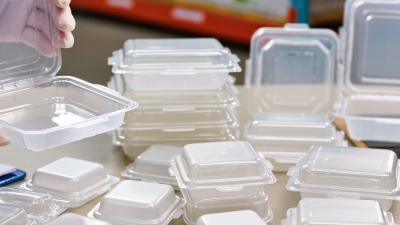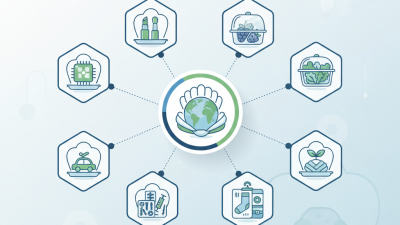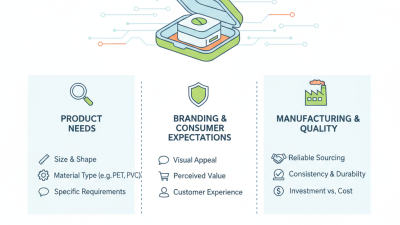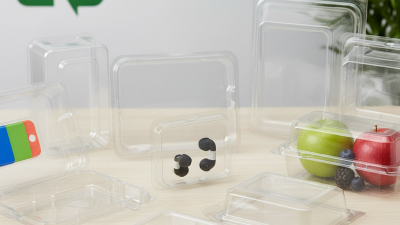
Choosing clamshell blister packaging for global markets requires more than comparing unit prices. Buyers must balance product protection, retail visibility, shipping efficiency, recycling options, and regional compliance. A package may perform well in a dry warehouse but fail after humidity exposure, compression, or repeated handling. Small details matter.
Smithers’ The Future of Global Packaging to 2028 estimates that the worldwide packaging market will approach approximately $1.34 trillion by 2028. This growth increases demand for practical, scalable packaging formats. However, the OECD’s Global Plastics Outlook reports that only about 9% of plastic waste was recycled globally in 2019. That figure makes material selection and end-of-life planning essential. PET, rPET, PVC, paperboard backing, and mono-material designs can produce different results in protection, visibility, cost, and recycling systems.
There is no universal solution. Not yet.
Experienced packaging teams usually test seal strength, drop resistance, barcode readability, shelf presentation, and opening safety before approving a supplier. They also review food-contact status when relevant, documentation, factory quality controls, and target-market requirements. ISO 18601 and related ISO 18602–18606 standards provide useful principles for packaging optimization and recovery. Still, standards do not replace real-world trials. A buyer should request samples, confirm dimensions, inspect tooling accuracy, and conduct transport testing with the actual product inside. This guide explains how global buyers can compare clamshell blister packaging with clearer technical judgment, fewer costly surprises, and a more realistic view of sustainability claims.

How to Choose Clamshell Blister Packaging for Global Buyers?
Define the product before selecting the clamshell structure. Measure its length, width, height, weight, and fragile points. A medical accessory needs a cleaner cavity and stronger seal than a small hardware item. Leave enough clearance for cables, labels, or protective films. Too much empty space increases movement and damage risk. Too little space creates pressure marks. I have seen both mistakes during sample reviews. They are expensive to correct later.
Protection must match the shipping route. Specify drop, vibration, compression, and temperature tests before mass production. ASTM D4169 or ISO 2248 can guide distribution testing. The Smithers report, The Future of Global Packaging to 2028, forecasts the global packaging market will exceed 1.2 trillion dollars. Scale matters, but material efficiency matters too. The OECD Global Plastics Outlook identifies packaging as responsible for about 40% of plastic waste. Consider PET, recycled PET, or paper-supported designs where product safety allows. Do not promise recyclability without checking local collection systems.
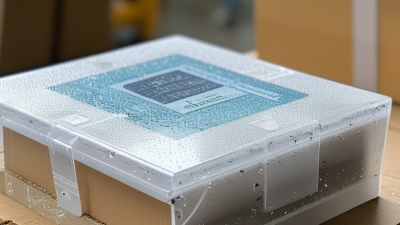
Presentation affects shelf visibility and buyer confidence. Define the hanging hole, card size, print area, barcode position, and opening method. A clear cavity can show product condition immediately. However, oversized graphics may hide important instructions. Test the package under retail lighting. Check whether the barcode scans through condensation or glare. One overlooked detail is opening force. A package that protects the product but frustrates users is not fully successful. Iterate, measure, and question the first design.
When choosing clamshell packaging, start with the material and product risk. PET offers clear visibility, strong impact resistance, and easier recycling in many markets. PVC can provide stiffness, but its recycling acceptance varies. RPET can reduce virgin plastic use, although color, odor, and supply consistency need checking. Plastics Europe reported global plastics production above 400 million tonnes in 2023, so material efficiency matters. Less resin can mean less protection, however. That trade-off deserves testing.
Size should follow the product, not the shelf image. Leave enough headspace for manual handling, but avoid a loose cavity that allows movement. A 2–4 mm clearance may suit compact accessories, while fragile items need cushioning features and thicker walls. Measure product tolerances across production batches. One sample is not enough. Small errors can create pressure points during ocean freight.
Structural design also affects opening, sealing, and transport damage. Hinged clamshells support retail display and repeated inspection. Two-piece designs can improve assembly flexibility and reduce tooling limits. Heat-sealed edges offer stronger tamper evidence, while snap-fit closures may simplify packing. UNEP’s 2023 report states that redesign, recycling, and reuse could reduce plastic pollution by 80% by 2040. That target is ambitious, and clamshells still need practical recovery routes. Check local collection guidance, resin identification, seal strength, drop performance, and barcode visibility before approving a global specification.
When choosing clamshell blister packaging, global buyers should test sealing, opening, and product access together. A strong heat seal protects against dust, moisture, and tampering. However, an overly strong seal can frustrate users and damage the product during opening. ASTM D4169 distribution testing can help evaluate vibration, compression, and drop risks before mass production. Seal strength should remain consistent across different climates, especially when products travel through humid ports or cold warehouses.
Opening design must also consider real users. The World Health Organization reports that about 1.3 billion people, or 16% of the global population, experience significant disability. Small tear tabs may be difficult for users with limited hand strength. A scored edge, rounded corner, or peelable lid can improve access. Product visibility remains valuable, but excessive plastic can increase waste. The U.S. EPA reported that containers and packaging represented 28.1% of municipal solid waste generation in 2018. That figure deserves attention during material selection.
Tips: Test opening force with several users, not only engineers. Check whether gloves, fingernails, or simple tools are needed. Measure seal strength after heat, cold, and humidity exposure. I would also challenge the first design. It may protect the item well, yet still feel inconvenient or wasteful. Provide clear access points without weakening the package during transport.
For global buyers, a clamshell is more than a clear retail shell. It must satisfy regulations, warehouses, and long transport routes. Confirm polymer identification, recycled-content claims, labeling, and opening safety with local compliance specialists. Requirements differ across markets and change frequently. The European Commission’s packaging policy direction emphasizes recyclability, material reduction, and producer responsibility. Treat compliance as a design input, not a final inspection. That saves rework.
Sustainability needs evidence, not attractive wording. The OECD’s Global Plastics Outlook (2022) reported 353 million tonnes of plastic waste in 2019, with only 9% recycled. When performance allows, choose one widely accepted polymer, such as PET or PP, and avoid unnecessary coatings, staples, and mixed materials. A lighter package is not always greener if it cracks during transport. This is easy to overlook. Request material certificates and verify recycled-content claims through reliable documentation.
Shipping performance also matters. UNCTAD’s Review of Maritime Transport 2023 states that over 80% of global merchandise trade by volume moves by sea. Measure packed cubic volume carefully, because empty space increases freight and handling impacts. Use compression, vibration, drop, humidity, and temperature testing based on recognized ISTA protocols. Test it properly. A clamshell that looks secure in a showroom may deform inside a hot container. In practice, buyers should compare total delivered cost, compliance risk, damage rates, and end-of-life options, not just the unit price.
For global buyers, quality starts with a sample that behaves like the final product. Check hinge movement, cavity fit, edge alignment, and seal strength after repeated opening. Measure plastic thickness at several points, because thin corners may crack during transport. Ask suppliers for material specifications, inspection records, and traceable batch information. Visual checks alone are not enough. Real use matters.
Cost should include tooling, packing, shipping, storage, and possible inspection expenses. A low unit price can hide expensive delays or high defect rates. Request a clear quotation with volume tiers and replacement terms. In one supplier comparison, I focused too heavily on price and overlooked packaging consistency. That mistake changed my evaluation method. I now compare samples, landed cost, and defect risk together.
Capacity requires more than a large factory number. Confirm monthly output, lead times, backup equipment, and peak-season planning. Ask how the supplier handles sudden order changes. Service is equally practical. Strong suppliers answer technical questions clearly and report problems early. They should provide a named contact, approval samples, and corrective-action records. Communication may seem minor, until a shipment misses its loading date. No supplier performs perfectly, so buyers should test responsiveness before committing to long-term volumes.