(208) 739-9142Monday – Friday 8 AM – 4:30 PM (MST)

2026 How to Choose Clamshell Packaging for Global Sourcing?

Choosing clamshell packaging for global sourcing is not simply a material decision. It affects product protection, freight efficiency, shelf visibility, tooling cost, and recycling outcomes. Smithers’ The Future of Packaging: Long-Term Strategic Forecast to 2028 places the global packaging market above one trillion U.S. dollars, with sustainability and supply-chain resilience driving investment. Meanwhile, PMMI’s Global Packaging Trends reports identify automation, lightweighting, and responsible material use as continuing priorities.

A practical sourcing review should compare PET, rPET, PVC, and paper-based alternatives against real product conditions. Check impact resistance, seal strength, humidity tolerance, and dimensional stability. A fruit tray may face condensation. An electronics pack may need tamper evidence and anti-static protection. Freight data matters too. A thinner shell can reduce material use, yet poor nesting may increase empty transport space. Small details become expensive at container scale.

Packaging sustainability expert Bob Lilienfeld has stated, “There is no such thing as a sustainable package, only more sustainable packages.” That warning fits clamshell packaging especially well. A recyclable polymer may still lose value when labels, adhesives, or dark pigments complicate sorting. The Ellen MacArthur Foundation also emphasizes designing packaging for circularity, not merely selecting a recyclable material. No scorecard is perfect. Supplier claims require testing, documentation, and independent verification. For global sourcing, buyers should request resin specifications, recycled-content evidence, tooling ownership terms, sample approvals, and end-of-life guidance for each target market. A low factory price can hide higher freight, rejection, or compliance costs. The better choice is the package that performs reliably, ships efficiently, and remains credible after disposal.

2026 How to Choose Clamshell Packaging for Global Sourcing?

Clamshell Packaging: Definition, Structure, and Main Applications

2026 How to Choose Clamshell Packaging for Global Sourcing?

Clamshell Packaging: Definition, Structure, and Main Applications

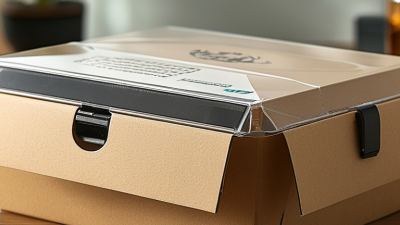
Clamshell packaging is a transparent package made from two connected plastic halves. One half holds the product, while the other protects it from dust, moisture, and handling damage. The two parts usually join through a hinge, locking tabs, or heat sealing. Some designs include a hanging hole for retail displays.

Its structure looks simple, but small details affect sourcing results. Measure the product length, width, height, and fragile points before requesting samples. A cavity that is too tight may scratch the product. A loose cavity may cause movement during transport.

Materials can include PET, rPET, PVC, or other suitable plastics. Confirm clarity, thickness, recycling goals, and local packaging requirements with the supplier.

I have seen attractive samples fail because their hinges cracked after repeated opening.

Clamshells are common for small hardware, stationery, personal accessories, electronic parts, toys, and selected food items. For food contact, verify the required safety documentation for each destination market.

For export shipments, test stacking strength and seal performance under different temperatures.

Manual opening may improve convenience, while strong sealing can improve security. Yet excessive sealing may frustrate customers. That trade-off deserves practical testing, not assumptions.

A good sourcing process compares samples, production tolerances, packing efficiency, and total landed cost before approval.

Key Material Choices for Different Product and Market Requirements

2026 How to Choose Clamshell Packaging for Global Sourcing?

Material selection should begin with the product, not the supplier’s standard catalog. Clear PET clamshells suit cosmetics, electronics accessories, and small hardware needing strong visibility. Recycled PET can reduce virgin plastic demand, but its clarity and consistency may vary between production batches. That matters when shelves display hundreds of identical packs.

For heavier products, recycled PET or high-impact polycarbonate can provide better hinge strength and drop resistance. However, polycarbonate usually increases cost and may complicate recycling streams. Paperboard-backed formats can reduce plastic volume, yet they need coatings for moisture resistance. Those coatings may affect local recycling access. Check this early.

Market infrastructure changes the best choice. The OECD’s Global Plastics Outlook reports that only 9% of global plastic waste was recycled in 2019. Therefore, a recyclable material is not automatically recycled. Confirm accepted polymers, collection systems, and labeling rules in each target market. PET may perform well in one country but require separation from bottle-grade PET elsewhere. Local testing is essential.

Smithers’ sustainable packaging research continues to identify recycled content, lightweighting, and recyclable designs as major industry priorities through 2028. Still, lightweighting can reduce puncture resistance. I have seen packaging pass factory inspection but fail after humid sea freight. Product weight, temperature, stacking pressure, and opening behavior should be tested together. A perfect material choice rarely exists; sourcing teams must document the trade-offs instead of hiding them.

How to Evaluate Protection, Design, and Product Visibility

When choosing clamshell packaging for global sourcing, evaluate protection before appearance. A rigid shell should resist crushing, edge impact, and repeated vibration during sea or air transport. Request samples with realistic product weight, not empty units. Test them against ISTA 3A methods, including drops, vibration, compression, and temperature changes. A neat sample can still fail after a long journey.

Product visibility matters, but excessive plastic can weaken the design. The U.S. EPA reported that containers and packaging represented 28.1% of municipal solid waste generation in 2018. That figure makes material reduction a sourcing responsibility, not merely a design preference. Use a clear front panel where inspection improves customer confidence, then reduce unnecessary depth, inserts, and oversized hanging tabs. UNEP’s Global Waste Management Outlook 2024 estimates municipal solid waste could rise from about 2.1 billion tonnes in 2023 to 3.8 billion tonnes by 2050. Small material decisions will matter.

Check seal strength, opening effort, barcode readability, and shelf stability across several production batches. Design should also accommodate different humidity levels and handling habits in target markets. Some teams overvalue crystal-clear visibility. That can be a mistake. A slightly smaller window may protect the product better and reduce material use. Require documented test results, dimensional tolerances, and recycled-content evidence from suppliers. Claims without verification are weak.

2026 How to Choose Clamshell Packaging for Global Sourcing? - How to Evaluate Protection, Design, and Product Visibility

Evaluation Dimension What to Check Typical Options or Benchmark Recommended Score
(1–5)
Global Sourcing Consideration
Material Selection Clarity, stiffness, impact resistance, food-contact suitability, and local recycling compatibility. Clear PET or rPET for high visibility; PP for improved toughness and heat resistance; PVC only where local regulations and recycling systems allow. 1–5 Confirm resin identification, recycled-content documentation, and destination-market restrictions before tooling.
Product Protection Resistance to crushing, puncture, vibration, abrasion, moisture, and tampering during transport. Use formed ribs, reinforced corners, controlled internal clearance, and a secure heat-seal or snap closure. 1–5 Validate with distribution testing that reflects the actual shipping route, stacking pattern, and climate exposure.
Product Visibility Visibility from the front, side, and retail display angle; distortion and glare control. Transparent PET commonly provides strong clarity; anti-glare texture or printed areas can improve readability under retail lighting. 1–5 Request production-intent samples because clarity can change with sheet thickness, forming temperature, and recycled content.
Tamper Evidence Ability to show opening, resealing, or damage without making the pack unnecessarily difficult to open. Heat-sealed perimeter, tear-open feature, locking tabs, or perforated opening strip. 1–5 Balance security with local consumer-safety requirements and accessibility expectations.
Design and Branding Area Available printable surface, label placement, barcode quiet zones, and compatibility with retail fixtures. A flat header card or printable flange improves communication while keeping the product visible. 1–5 Check multilingual labeling space, symbol requirements, barcode readability, and country-specific legal information.
Dimensional Efficiency Empty-pack nesting, packed-carton utilization, pallet density, and dimensional shipping weight. Minimize unused headspace while maintaining adequate clearance around fragile components. 1–5 Compare cubic volume and pallet configuration, not only unit price, because freight can dominate landed cost.
Manufacturing Consistency Wall-thickness distribution, forming accuracy, closure fit, sealing strength, and appearance consistency. Define tolerances for critical dimensions and approve a signed production reference sample. 1–5 Use a documented inspection plan covering first-article approval, in-process checks, and final random inspection.
Regulatory and Testing Readiness Applicable packaging, chemical, food-contact, labeling, recycling, and transport requirements. Maintain material declarations, migration or compliance reports where relevant, and packaging test records. 1–5 Requirements vary by destination and product category; obtain current importer or regulatory guidance before mass production.
Sustainability and End-of-Life Material simplicity, recycled content, pack weight, recyclability, and separation of labels or inserts. Prefer a mono-material design where practical; reduce excess material and use compatible labels, inks, and adhesives. 1–5 Do not assume recyclability is universal; verify collection and sorting infrastructure in each target market.
Total Cost of Ownership Tooling, material, conversion, printing, packing, freight, duties, inspection, and expected damage rate. Compare landed cost per saleable unit rather than ex-factory packaging price alone. 1–5 Model currency changes, minimum order quantities, lead times, tooling amortization, and replacement-part requirements.
Suggested decision rule: Select the design with the highest weighted score after confirming protection performance, destination-market compliance, landed cost, and end-of-life feasibility. A low unit price should not outweigh poor transport protection or regulatory uncertainty.

Global Sourcing Standards, Supplier Audits, and Quality Control

2026 How to Choose Clamshell Packaging for Global Sourcing?

Choosing clamshell packaging for global sourcing starts with a documented specification. Define polymer type, thickness, hinge cycles, closure force, dimensions, and recycled-content requirements. Map these requirements to destination-market packaging standards and agreed test methods. The package must protect products during compression, vibration, humidity, and temperature changes. A clear sample approval process prevents attractive prototypes from hiding weak seals. Ask suppliers for material declarations, batch traceability, and test records. Those documents matter more than polished sales presentations.

Supplier audits should inspect real production, not only a prepared showroom. Review incoming-material checks, mold maintenance, line clearance, worker training, and corrective-action logs. Watch an operator measure wall thickness at several points. A thin corner can fail before the center does. Confirm that quality staff can stop production without commercial pressure. I have seen inspection plans miss hinge fatigue because samples were tested too early. That mistake is easy to repeat.

Use an agreed sampling plan, with acceptance limits for scratches, flash, warping, contamination, and closure alignment. Test packed units after shipping simulation, then inspect them under normal warehouse lighting. Photographs help, but physical samples reveal brittleness and sharp edges better. Keep retained samples from each lot. Do not rely on one successful shipment. Supplier performance can drift after a tooling change, resin substitution, or rushed schedule. A quarterly review should compare defect rates, audit findings, and customer complaints. Some requirements remain unclear. That is where assumptions become expensive.

Cost, Shipping, Sustainability, and Import Compliance Considerations

Choosing clamshell packaging in 2026 requires more than comparing factory quotations.

Start with the product’s dimensions, weight, sharp edges, and display needs. A secure fit reduces damage, inserts, and wasted material. Ask suppliers for a packed sample, not only a drawing. Test the sample through stacking, vibration, drop, and temperature changes.

Small hinge cracks often appear after shipment, not during inspection. Measure the packed volume. Freight can cost more than plastic.

For global sourcing, compare total landed cost, including tooling, unit price, cartons, pallet space, freight, duties, testing, and recycling fees.

Confirm the material and additives in writing. Check whether recycled content affects clarity or impact strength. It sometimes does. Request current declarations and food-contact evidence when relevant.

Use accurate product descriptions for customs classification. Import rules differ by destination, while packaging marks and producer obligations may need local review.

Do not rely on a generic certificate. Verify its scope, date, test method, and shipment applicability. Sustainability needs measurable choices, such as lighter walls, recycled resin, fewer components, and compatibility with local collection systems.

A recyclable package is not useful if no facility accepts it. That point is easy to miss.

Document approvals, tolerances, and change-control terms before production. A cheaper design may fail after a resin change. Review it again.

Go to Top