(208) 739-9142Monday – Friday 8 AM – 4:30 PM (MST)

2026 Top Tray Sealing Machine Types for Global Buyers

Choosing among the 2026 top tray sealing machine types requires more than comparing catalog speeds. Global buyers must match equipment with products, trays, films, labor, and local service conditions. A tray sealing machine for fresh meat may need modified atmosphere packaging, while one for ready meals may prioritize leak resistance and fast changeovers. Bakery products often require gentler handling.

The main options include manual, semi-automatic, automatic inline, rotary, vacuum, and MAP tray sealers. Manual models suit small batches and frequent product changes. Semi-automatic machines offer better consistency without demanding a large production line. Inline systems support higher output, but they need reliable conveyors, trained operators, and sufficient floor space. Rotary designs can reduce cycle time, although tooling changes may become difficult.

Real-world performance is rarely identical to the brochure.

Buyers should examine sealing temperature control, pressure stability, film compatibility, tray dimensions, cleaning access, and safety features. Ask for sample trials using actual products and packaging materials. Check seal strength after refrigeration, transport simulation, and storage. Confirm whether spare parts, remote support, operator training, and maintenance documentation are available in the target market.

A strong purchase decision also considers energy use, compressed-air demand, sanitation routines, and future expansion. Some machines appear economical but create hidden labor costs during changeovers. Others provide impressive speed but perform poorly with uneven trays. The best choice is not the fastest machine. It is the most dependable fit for verified production needs. This guide compares leading tray sealing machine types and highlights practical trade-offs global buyers should review before investing in 2026.

2026 Top Tray Sealing Machine Types for Global Buyers

What a Tray Sealing Machine Is and How It Works

2026 Top Tray Sealing Machine Types for Global Buyers

What a Tray Sealing Machine Is and How It Works

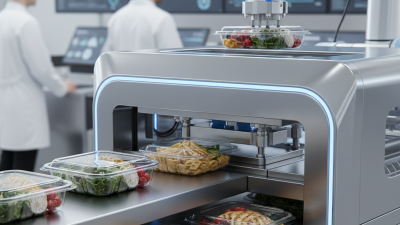
A tray sealing machine closes filled trays with a heat-sealed film lid. It supports cleaner handling, consistent presentation, and controlled product protection.

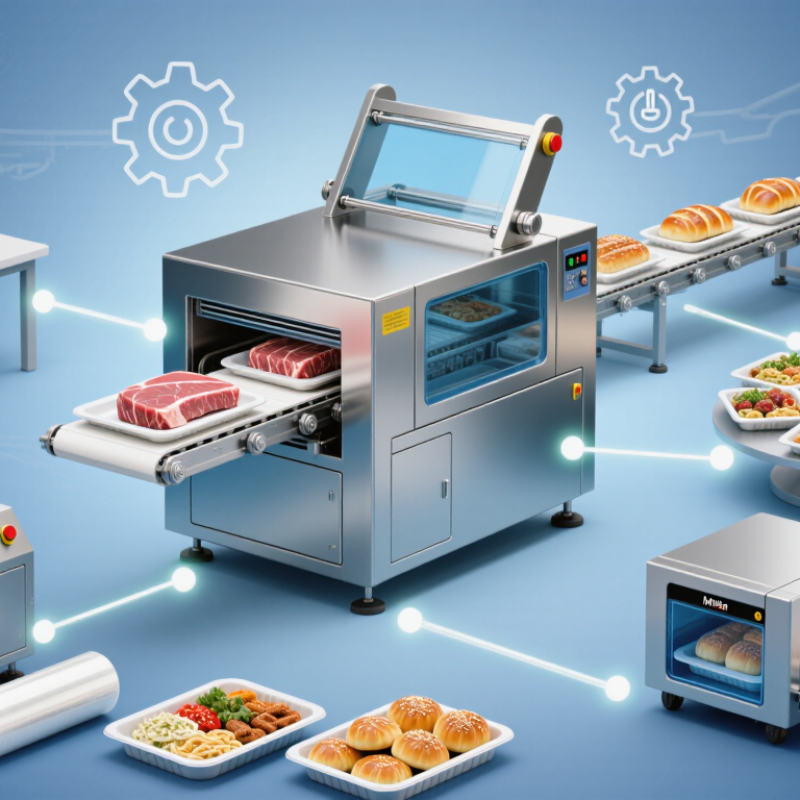
The process is straightforward. An operator loads trays onto a conveyor or forming station. The machine positions each tray beneath a sealing tool. Film unwinds from a roll and covers the tray rim. Heat and pressure then bond the film to the flange. A cutting unit removes excess film, while the sealed tray moves toward discharge.

Small details affect the result. The sealing temperature must match the tray and film materials. Pressure should distribute evenly across the rim. Dwell time also matters, especially when the product creates condensation. A sensor can detect missing trays and prevent wasted film. Some systems include gas flushing, which changes the internal atmosphere before sealing.

Good operators inspect seal width, wrinkles, leaks, and film alignment. A practical test may involve visual checks, peel testing, or pressure testing. Not every defect comes from the machine. A dirty rim or uneven filling can cause weak seals. This is easy to overlook. Buyers should also consider changeover time, cleaning access, control accuracy, and local service capability. A faster machine is not always the better choice when adjustments become difficult.

Key Tray Sealing Machine Types for Global Buyers in 2026

Key Tray Sealing Machine Types for Global Buyers in 2026

Global buyers can choose from several tray sealing machine types in 2026. Semi-automatic machines suit small factories, seasonal products, and frequent format changes. They need an operator to place trays and remove sealed packs. Fully automatic inline machines support higher output and steadier labor costs. Rotary machines offer continuous sealing for large production lines. Their speed is useful, but tooling changes may take longer than expected.

MAP and vacuum tray sealers help protect products through controlled gas or air removal. Skin packaging creates a close film fit around the product and tray. Buyers should compare seal temperature, film compatibility, tray material, and changeover time. In practical evaluations, a fast machine can still disappoint when cleaning access is poor. A detailed factory trial remains more reliable than a polished specification sheet.

Tips: Test the machine with your actual trays, film, and product moisture. Check seal strength after cooling, not immediately. Confirm food-contact materials, electrical requirements, guarding, and service response for your destination market. Ask for spare-part lists and operator training details. Do not judge capacity from speed alone. A higher output claim may ignore loading time, rejected packs, and planned sanitation.

2026 Top Tray Sealing Machine Types for Global Buyers

Typical commercial cycle-rate ranges by machine type

Manual and semi-automatic systems are commonly selected for small batches and flexible production. Inline, rotary, and high-speed MAP systems are designed for higher-volume operations. Actual output depends on tray size, sealing-film format, product characteristics, tooling configuration, gas flushing, and operator workflow.

How Sealing Methods and Machine Structures Differ

2026 Top Tray Sealing Machine Types for Global Buyers

How Sealing Methods and Machine Structures Differ

Tray sealers differ mainly through sealing methods and machine architecture. Heat sealing uses a heated tool to bond film with a compatible tray rim. It is simple, widely serviceable, and suitable for many food applications. Modified-atmosphere packaging adds gas flushing before sealing, helping control oxygen and moisture. Vacuum skin sealing removes air first, then draws film tightly over the product. The appearance is excellent, but film control and leak testing become more demanding.

Machine structure changes production behavior. Semi-automatic units suit restaurants, laboratories, and smaller processors. Inline machines connect denesting, filling, gas flushing, sealing, coding, and discharge. Rotary systems offer high output in a compact footprint, although tool changes can be less convenient. Thermoform-fill-seal equipment creates the tray from flexible or rigid web material, reducing purchased-tray handling but increasing setup complexity. It needs disciplined temperature control.

PMMI’s 2024 State of the Industry report places U.S. packaging machinery shipments above 11 billion dollars in recent reporting, showing strong investment in automated packaging. Smithers’ Future of Global Packaging to 2028 also projects continued global packaging growth, near 3 percent annually. These figures support automation, but they do not guarantee a suitable sealer. A buyer should compare actual tray dimensions, film properties, seal width, cycle rate, and cleaning access. In practice, advertised speed can fall sharply with wet rims or frequent format changes. That is an inconvenient detail. Yet it matters more than a polished brochure.

2026 Top Tray Sealing Machine Types for Global Buyers - How Sealing Methods and Machine Structures Differ
Machine Type Primary Sealing Method Machine Structure Typical Output Range Atmosphere or Vacuum Capability Tray and Film Compatibility Typical Applications Main Advantages Key Purchasing Considerations
Manual Tray Sealer Heat sealing with a manually operated sealing die Benchtop or compact floor-standing frame; one tray cavity is commonly loaded and unloaded by the operator Approximately 2–8 cycles per minute, depending on operator speed and dwell time Usually atmospheric sealing; optional gas flushing is available on selected configurations Rigid or semi-rigid plastic trays; commonly uses heat-sealable lidding film supplied from a roll Restaurants, laboratories, small food producers, pilot production and seasonal products Low investment, simple operation, small footprint and quick product changeover Labor cost, operator consistency, limited output and fewer options for inline automation
Semi-Automatic Tray Sealer Heat sealing using a pneumatic or motor-driven sealing die Single-station or twin-station frame; trays are manually loaded while sealing, film cutting and ejecting are machine-assisted Approximately 5–20 cycles per minute Atmospheric sealing or intermittent gas flushing; vacuum and gas functions depend on chamber design Plastic, coated paperboard and selected compostable trays with compatible heat-seal coatings Small and medium food-processing operations, prepared meals, fresh produce and deli products Better seal consistency and productivity than manual systems without the cost of a fully automatic line Check tray indexing, tool-change time, gas consumption, film registration and operator access requirements
Automatic Inline Tray Sealer Continuous or intermittent heat sealing with automatic film feeding and cutting Conveyor-fed linear structure with automatic tray spacing, sealing station, film unwind, scrap rewinding and discharge conveyor Approximately 20–80 cycles per minute, depending on the number of lanes and cavities Atmospheric sealing, gas flushing, vacuum-gas packaging and modified-atmosphere packaging (MAP) Rigid trays with consistent dimensions; compatible with PET, PP, PE-coated board and other approved sealant-layer structures High-volume fresh foods, ready meals, meat, seafood, bakery and produce packing lines High throughput, repeatable sealing, integration with fillers, checkweighers, metal detectors and case packers Requires accurate upstream tray loading, stable tray tolerances, sufficient floor space and coordinated line speeds
Rotary or Carousel Tray Sealer Heat sealing in indexed rotary stations; vacuum and gas processes can be performed inside a chamber Rotating table or carousel with several tooling stations for loading, sealing, cutting and unloading Approximately 30–100 cycles per minute, depending on station count, product type and sealing process Suitable for atmospheric sealing, gas flushing, vacuum-gas MAP and some vacuum applications Standardized trays and pre-cut or reel-fed lidding film; tooling is generally product-specific Medium- to high-volume food production where compact footprint and fast indexing are important Good output in a relatively compact area; multiple operations can be distributed across stations More complex tooling and maintenance; rotary indexing must be matched to tray rigidity and product presentation
Vacuum Chamber Tray Sealer Vacuum removal followed by heat sealing; gas backfilling may be added Sealing die is enclosed by a chamber or bell; the chamber is evacuated before the film is sealed to the tray flange Approximately 1–6 cycles per minute, depending on chamber volume, vacuum level and number of cavities Vacuum sealing and vacuum-gas MAP; suitable for products where air reduction is a priority Rigid trays with sufficient mechanical strength to withstand pressure changes; films must be designed for the sealing process Meat, seafood, cheese, high-value products and applications requiring reduced residual oxygen Reduces trapped air and can support extended quality when combined with suitable product, film and cold-chain controls Longer cycle time, higher pump requirements and possible product deformation; process validation is essential
MAP Gas-Flushing Tray Sealer Air displacement by a controlled gas mixture followed by heat sealing Intermittent or inline sealing chamber with gas injection, pressure control and film sealing station Approximately 5–60 cycles per minute, depending on chamber design, gas exchange method and cavity count Modified-atmosphere packaging using gases such as carbon dioxide, nitrogen or oxygen mixtures selected for the product Gas-tight trays and lidding films with suitable oxygen and carbon-dioxide barrier properties Fresh meat, poultry, seafood, prepared foods, cheese and selected bakery products Can help control oxidation and microbial growth when the gas recipe, seal integrity and cold chain are properly managed Gas mixture, residual oxygen, leak rate, product respiration and film barrier performance must be verified
Vacuum Skin Packaging Machine Heated skin film is drawn tightly over the product and sealed to a coated tray, usually with vacuum assistance Forming-and-sealing station with a flexible upper film system and product-specific lower tray tooling Approximately 5–30 cycles per minute, depending on film heating, vacuum level and cavity arrangement Uses vacuum to create close product contact; it is not the same process as conventional gas-flush MAP Rigid trays with suitable sealant coatings; flexible skin films must have appropriate stretch, puncture and barrier properties Fresh meat, seafood, cheese, premium ready meals and products presented in a high-visibility package Close product contact, attractive presentation, reduced purge movement and strong protection against handling damage Requires accurate film temperature, product height control, compatible tray coatings and careful control of sharp product edges
Thermoform-Fill-Seal System Bottom web is heated and thermoformed; the filled package is then sealed with a top web Continuous web-based structure with forming, filling, gas or vacuum processing, sealing, cutting and discharge sections Approximately 10–40 cycles per minute; output is commonly measured by packages per minute and cavity count Atmospheric, vacuum, gas flushing and vacuum-gas MAP configurations are available Flexible or semi-rigid bottom webs and lidding films selected for forming, sealing, barrier and recycling requirements High-volume meat, cheese, seafood, ready meals and products requiring customized package dimensions Efficient material use, flexible pack size, strong automation potential and reduced reliance on pre-made trays Higher capital cost, more complex film specification, longer changeovers and greater demand for process expertise
Ultrasonic Tray Sealer Ultrasonic energy creates localized heat at the seal interface instead of heating the complete sealing tool Sealing horn and anvil system integrated into a linear or indexed machine frame Approximately 10–50 cycles per minute, depending on tray material, sealing area and equipment configuration Generally atmospheric; gas-flush capability depends on the surrounding chamber and machine layout Requires carefully matched tray and film structures; multilayer materials and sealant layers must be validated for ultrasonic compatibility Selected food, medical, pharmaceutical and technical packaging applications where controlled energy input is valuable Fast localized sealing, low heat transfer to the product and potential for reduced tool warm-up time Material compatibility is critical; tooling, amplitude, pressure and weld time require application-specific validation
High-Speed Multi-Lane Tray Sealer Parallel heat-sealing operations using multiple cavities or lanes in one sealing cycle Servo-driven conveyor or indexed platform with multi-cavity tooling, automatic film handling and integrated discharge Approximately 60–200 packages per minute, depending on cavity count, tray size and product handling Atmospheric sealing, gas flushing, vacuum-gas MAP and other validated chamber processes Uniform trays with tight dimensional tolerances; film registration and sealant compatibility are essential Large-scale production of fresh food, ready meals, dairy products, meat and seafood High labor efficiency, stable cycle control and efficient connection to automated upstream and downstream equipment Highest sensitivity to tray dimensional variation, film tracking, product contamination and maintenance quality
Reference note: Output figures are typical engineering ranges for comparable machine configurations, not guaranteed production capacities. Actual performance depends on tray dimensions, cavity count, product loading, sealing temperature, dwell time, film structure, vacuum level, gas exchange requirements and operator or line conditions.

Choosing the Right Tray Sealer for Products and Production Needs

2026 Top Tray Sealing Machine Types for Global Buyers

Choosing the right tray sealer starts with the product, not the machine’s advertised speed. Fresh meat, prepared meals, bakery items, and produce behave differently during sealing. Product behavior matters. A machine for modified atmosphere packaging needs accurate gas control, stable film tension, and reliable leak detection. Vacuum skin packaging requires stronger film handling and careful pressure control. For simple overwrapping, a compact heat sealer may be more practical and easier to maintain.

Tray material also affects performance. Plastic, coated paperboard, and recyclable mono-material trays can require different temperatures and sealing pressures. During factory trials, check seal strength, corner quality, film waste, and tray deformation. A clean seal around a wet meal is more important than a high cycle rate. It should be tested. Ask suppliers to run your actual trays and products, not sample materials only.

Production needs deserve equal attention. Consider daily output, tray sizes, changeover time, operator skill, and available floor space. A modular machine can support future products, while an oversized system may increase cleaning and maintenance costs. I have seen buyers choose impressive speed and later struggle with frequent adjustments. That choice needs reflection. Confirm sanitation access, spare-part availability, training, and documented testing procedures before purchase. A dependable tray sealer should fit the entire production process, including its less glamorous moments.

Global Buying Factors: Standards, Automation, and After-Sales Support

2026 Top Tray Sealing Machine Types for Global Buyers

Global buyers should assess tray sealing machines through local standards, not catalog descriptions. Check food-contact materials, electrical safety, machine guarding, and documentation before comparing prices. Requirements differ between markets and product categories. A machine for chilled meals may need different sealing controls than one for fresh produce. Ask for test results using your actual tray, film, filling, and sealing temperature. Small material changes can affect leak rates.

Automation should solve measurable production problems. Servo-driven indexing, automatic film tracking, seal-temperature monitoring, and vision inspection can reduce operator errors. Inline machines suit continuous production, while rotary models may offer flexible changeovers. Vacuum or modified-atmosphere functions require careful gas control and package testing. More automation is not always better. Complex systems can increase maintenance time when staff training is limited. This is easy to underestimate.

After-sales support often determines the machine’s real value. Request installation guidance, operator training, preventive-maintenance schedules, and multilingual manuals. Confirm response times for remote diagnostics and the availability of heating elements, sensors, cutting tools, and control components. A useful supplier should provide clear service procedures, not vague promises. Buyers should also ask who pays for travel and commissioning. In practice, even a well-specified machine can disappoint when spare parts arrive slowly. Build a support plan before signing, and leave room to revise it after the first production trial.

Go to Top