(208) 739-9142Monday – Friday 8 AM – 4:30 PM (MST)

7 Tips for Choosing a Clamshell Packaging Machine

Choosing a clamshell packaging machine is not just a matter of speed. The right system must match the product, package material, output target, and available floor space. A berry punnet, a medical device, and a small electronic component place very different demands on forming, sealing, and inspection. One overlooked detail can mean frequent adjustments, wasted film, or packs that fail to close cleanly.

Industry research offers useful context. PMMI’s 2024 State of the Industry report examines packaging machinery trends and the operational pressures shaping investment, including efficiency and workforce needs. It is a valuable starting point, but broad industry findings cannot replace a trial using your actual product and packaging material. Ask suppliers to demonstrate changeovers, seal consistency, and reject handling—not just their best-case speed. Small details matter.

Packaging educator Walter Soroka, CPP, defines packaging as “the science, art, and technology of enclosing or protecting products.” That principle applies directly to machine selection: the package must protect the product and work reliably on the line. Still, no machine is perfect for every operation. A faster system may bring more setup complexity, and a lower purchase price may not mean lower operating costs. These seven tips will help buyers compare equipment carefully, ask sharper questions, and choose a clamshell packaging machine suited to real production conditions.
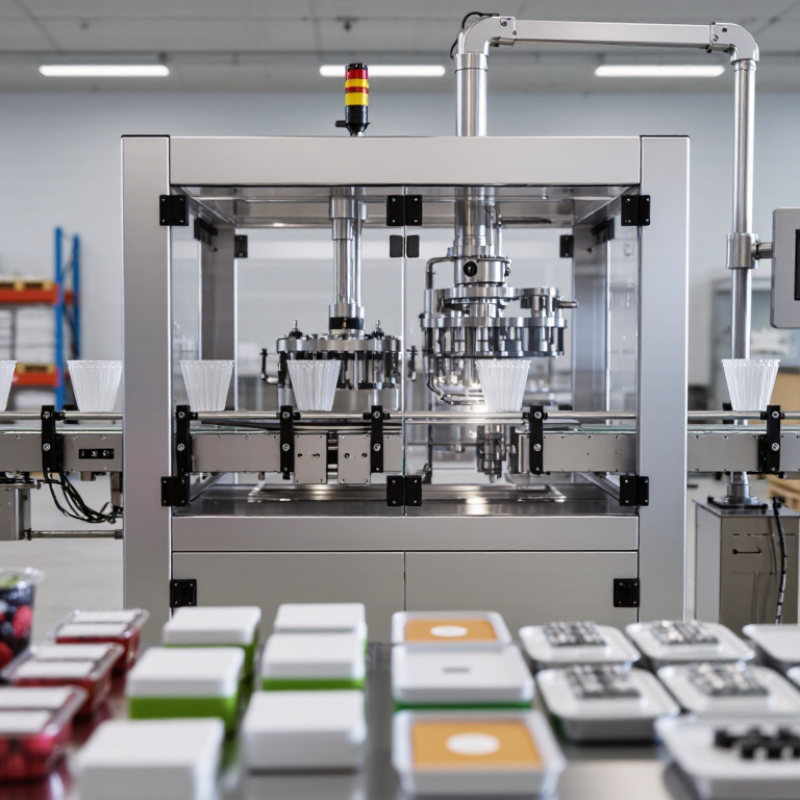
7 Tips for Choosing a Clamshell Packaging Machine

Define Your Clamshell Packaging Requirements

Define the product before selecting a clamshell packaging machine. Record its length, width, height, and weight, and any fragile edges. Check how the package must open, close, and display the item. A small fit error can cause shifting, crushed corners, or difficult sealing. Note your target output per minute, shift length, and expected changeovers, too. Those details shape the required forming, sealing, and feeding setup.

Tip: Run your actual product and packaging samples through a machine trial. Check seal consistency, loading effort, and finished-pack dimensions. A clean sample may hide real production problems.

Specify the material and end-of-life goals early. The U.S. EPA’s 2018 Advancing Sustainable Materials Management report estimated that containers and packaging made up 82.2 million tons, or 28.1%, of U.S. municipal solid waste. That figure covers many packaging types, but it shows why material choices deserve attention. Confirm which materials your supplier can process, and test their sealing behavior and clarity. Also define available floor space, power, compressed air, and operator access. These are easy details to overlook. They can still delay installation. Keep a written requirement sheet, and revisit assumptions when product sizes or volumes change.

Match the Machine to Your Packaging Materials

A clamshell packaging machine should match the material it forms or seals, not just its advertised speed. Thin PET sheet may heat and form quickly, while thicker or recycled-content stock can respond less evenly. PET, rPET, and PP each have different forming and sealing needs. Small differences matter. If you run pre-made clamshells, check that the fixtures fit the hinge, flange width, and lid shape.

Ask for a trial using your actual material, including its normal thickness range. Check that temperature, pressure, and dwell time can be adjusted without slowing production excessively. Roll-stock equipment also needs suitable heating and forming controls for the package depth and shape. Pre-made shells need consistent positioning so the seal lands evenly around the flange. A machine that handles one sample well may struggle with another production lot.

Inspect the finished packs for cloudy areas, warped edges, thin corners, and weak seals. Test the real stock. A clear sample is not enough. Try the package with the product inside, since its weight or shape can affect handling and closure. It is easy to focus on cycle speed and overlook material variation. Leave time for repeat trials; one successful run does not prove the setup is reliable.

Choose the Right Machine Type and Production Capacity

Choosing a clamshell packaging machine starts with the package, not the advertised speed. Check whether you need to form trays from roll stock or seal preformed clamshells. The right setup depends on package dimensions, material thickness, closure style, and product shape. A tall item may need deeper tooling, while a wide flange needs reliable sealing across its full edge. Test actual samples before committing. Small fit problems become expensive at production speed.

Tip: Estimate capacity from good packs per minute, not the machine’s headline cycle rate. Multiply expected output by usable run time, then account for loading, changeovers, cleaning, and rejected packs. Compare that figure with your busiest regular shift, not just today’s average. Some buffer helps. Too much capacity can mean paying for equipment that sits idle.

Match automation to the people and space available. A semi-automatic machine may suit shorter runs or frequent product changes; a higher-output line can help with steady volumes, but only if feeding and downstream packing keep pace. Ask for a trial using your product, film, and target settings. Record sustained output and seal quality over a realistic run. One estimate will be wrong; revisit it after a production trial.

Evaluate Ease of Operation, Safety, and Maintenance

A clamshell machine should feel manageable during a real production shift, not just during a polished demonstration. Ask an operator to load a tray, clear a misfeed, change a film roll, and restart the line. Watch how often they reach across hot surfaces or need a tool for routine adjustments. Controls should be clearly labeled, and safe access should not depend on memorizing a complicated sequence. Small details matter. The U.S. Bureau of Labor Statistics reported 2.8 recordable injury and illness cases per 100 full-time workers in manufacturing in 2023. That broad figure is not machine-specific, but it reinforces the value of checking guards, interlocks, and emergency stops under working conditions.

Maintenance access deserves the same scrutiny. Can a technician reach heaters, sensors, and sealing components without removing unrelated assemblies? Ask how long common cleaning and changeover tasks take, then verify the steps on the machine. The U.S. Department of Energy’s Operations & Maintenance Best Practices Guide estimates that predictive maintenance can reduce breakdowns by 70–75 percent across facilities. These are general benchmarks, not clamshell-machine guarantees. A supplier should explain which checks are scheduled, what wear parts are stocked, and how faults appear on the control screen. A tidy demo can hide awkward access; I would want to see the service procedure repeated by someone who did not install the machine.

7 Tips for Choosing a Clamshell Packaging Machine

Evaluate ease of operation, safety, and maintenance.

The bars count the practical checklist points in this guide, not survey results: operation covers changeovers, controls, and speed adjustments; safety covers guarding and emergency stops; maintenance covers cleaning access and serviceability.

Compare Total Cost, Supplier Support, and Future Needs

7 Tips for Choosing a Clamshell Packaging Machine

Compare the purchase quote with the full cost of ownership. Include tooling, installation, operator training, energy, changeover time, spare parts, and planned maintenance. PMMI reported $10.9 billion in U.S. packaging-machinery shipments in 2022, up 8.2% year over year, in its 2023 State of the Industry report. That figure covers the wider machinery sector, not clamshell equipment alone, but it signals a sizeable, evolving market. Ask suppliers to show how their cost estimates were calculated. A neat spreadsheet is not proof.

Supplier support affects daily output. Ask how quickly technicians respond, which parts they stock, and whether remote troubleshooting is available. Request a sample changeover using your actual tray size and film. Watch how long it takes, and note any steps that depend on one experienced operator. Small details matter. A phone promise is hard to measure; a written service-level commitment is clearer. Still, response times may vary by location, so check the nearest service coverage.

Plan for likely changes, not every imaginable one. List possible future tray dimensions, production volumes, and line-speed targets, then ask what upgrades each would require. Check whether the machine can accept new tooling and connect with existing conveyors or inspection systems. Avoid paying for unused capacity today. But leaving no room for growth can become expensive. Forecasts are imperfect; ours often are, too. Revisit assumptions with production staff before choosing.

7 Tips for Choosing a Clamshell Packaging Machine – Compare Total Cost, Supplier Support, and Future Needs

Tip What to Compare Useful Data or Check Why It Matters
1. Match capacity to actual demand Rated output, sustainable output, and your required production rate. Compare the machine’s quoted cycles per minute with a timed production trial using your product, package, and operators. Include loading, inspection, and changeover time. Advertised speed may not reflect usable output. Buying substantially more capacity than needed can raise purchase and operating costs.
2. Confirm product and package compatibility Product dimensions, package size, material, sealing method, and tooling range. Provide the largest and smallest products and package samples. Verify fit, seal quality, trim, and any required safety or tamper-evident features. A machine that cannot reliably handle your full size range may require extra tooling or a second machine.
3. Compare total cost of ownership Purchase price plus installation, tooling, utilities, labor, maintenance, and downtime. Build a 3–5-year cost model. Request separate quotes for delivery, commissioning, molds or dies, training, spare parts, and service visits. A lower initial price can be offset by higher tooling, labor, energy, or service costs.
4. Evaluate changeover and tooling costs Changeover time, number of package formats, and cost of additional tooling. Ask for a witnessed changeover between two of your formats. Record elapsed time, tools required, and whether adjustments are repeatable. Frequent format changes can reduce production time and make quick, repeatable adjustments valuable.
5. Check supplier support and parts availability Warranty terms, response arrangements, technician access, training, and spare-parts lead times. Get support hours and escalation steps in writing. Identify critical wear parts and ask for recommended on-site stock and typical replenishment times. Support delays and unavailable parts can extend downtime after a fault.
6. Verify safety, utilities, and installation requirements Guarding, emergency stops, electrical supply, compressed air, footprint, and operator access. Request an installation checklist and utility specifications. Have your safety and facilities teams review the machine and site layout before purchase. Unplanned site work or safety modifications can delay installation and add cost.
7. Plan for future production needs New package sizes, added shifts, automation options, and integration with upstream or downstream equipment. Ask which upgrades can be added later and what space, controls, or interfaces they require. Compare the cost of expansion with buying a larger configuration now. A suitable upgrade path can help accommodate growth without replacing the entire machine.

Use these points as a comparison checklist. Actual output, costs, and support arrangements vary by machine configuration, package, site conditions, and supplier; confirm them with product trials and written quotations.

Go to Top