Top Bulk Clamshell Packaging Suppliers for Global Buyers?
Choosing the right supplier matters when every tray, hinge, and shipment affects product protection. This guide examines the top bulk clamshell packaging suppliers for global buyers, with attention to quality, pricing, customization, and delivery reliability.
Walter Soroka, a respected packaging educator and author of Fundamentals of Packaging Technology, described packaging as “the science, art, and technology of enclosing and protecting products for distribution, storage, sale, and use.” His definition remains practical. A clamshell must protect the product, display it clearly, and survive real handling. A cracked PET shell, weak hinge, or poorly aligned seal can create costly problems before the goods reach a retail shelf.
Details matter.
Reliable suppliers should explain resin options, including PET and recycled-content materials. They should provide tooling samples, dimensional drawings, production tolerances, and documented quality checks. Global buyers also need clear information about minimum order quantities, mold ownership, lead times, export packing, and destination-market requirements. Food-contact, recycling, labeling, and extended producer responsibility rules can differ by country. Therefore, one specification may not suit every market.
A low quoted price can look attractive, yet freight, rejected units, and replacement tooling may change the final cost. I have seen supplier comparisons become less useful when buyers overlook these hidden variables. No supplier is perfect. The strongest candidates communicate limitations early, provide traceable samples, and respond consistently when a problem appears. This introduction sets a practical basis for comparing bulk clamshell packaging suppliers with greater confidence.
What Is Bulk Clamshell Packaging and Where Is It Used?
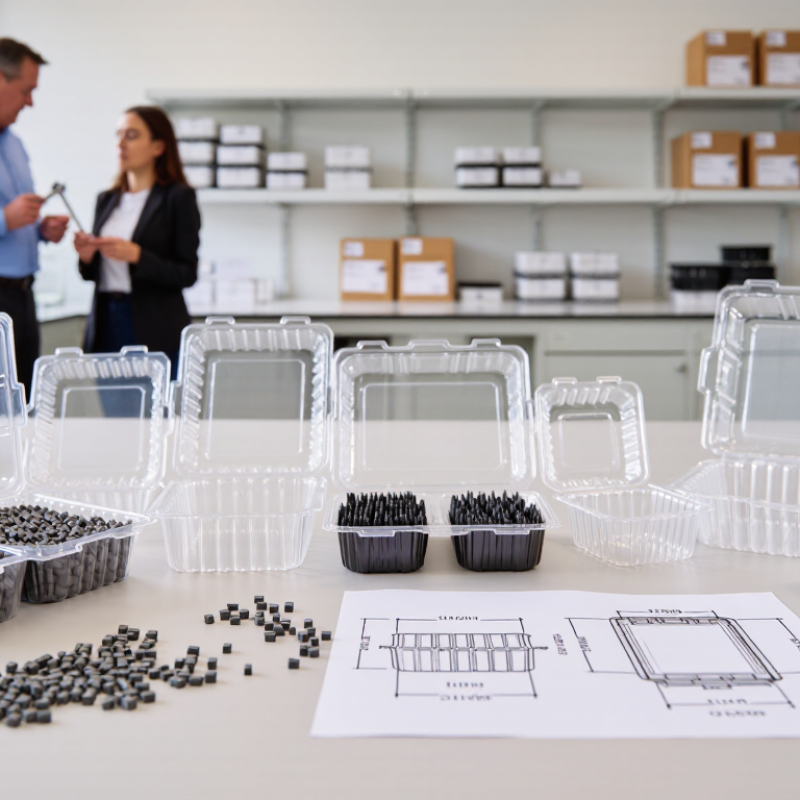
Bulk clamshell packaging consists of transparent, hinged plastic containers purchased in large production quantities. The lid folds over a shaped base and closes around products without separate assembly. Manufacturers commonly use PET, rPET, or other approved plastics, depending on product needs and regional requirements. A sample shipment reveals more than a catalog image. Check hinge strength, wall thickness, clarity, and closure pressure by hand. Small differences matter.
Retailers use clamshells for berries, bakery items, hardware, electronics accessories, cosmetics, and small household goods. The rigid shell protects contents from crushing, dust, and casual handling. Clear walls let shoppers inspect color, quantity, and surface condition before purchase. For produce, ventilation holes can reduce trapped moisture, although poor spacing may accelerate drying. That tradeoff deserves testing. In electronics, internal cavities prevent movement during transport, while hang tabs support peg displays.
Global buyers should compare cavity dimensions, carton counts, pallet efficiency, tooling costs, and delivery consistency. Ask suppliers for material specifications, food-contact documentation where relevant, and compression or drop-test results. Factory experience matters, but verified samples matter more. A container that works in a warehouse may fail after cold storage or rough ocean transit. I would test filled units through stacking, vibration, and opening cycles before approving a large order. The process can feel slower. It often prevents expensive rework.
Top Global Regions for Reliable Bulk Clamshell Suppliers
Top Global Regions for Reliable Bulk Clamshell Suppliers
Global buyers often compare East Asia, Southeast Asia, Europe, and North America for bulk clamshell packaging. East Asia offers broad manufacturing capacity, precise tooling, and competitive high-volume production. Southeast Asia can provide flexible order coordination and growing plastics expertise. European suppliers often emphasize recycled materials, traceability, and consistent quality control. North American producers may offer shorter domestic delivery times and responsive technical support.
No region is perfect. A lower unit price can hide higher freight costs, slower sampling, or difficult mold revisions. Experienced buyers should verify material specifications, closure strength, wall thickness, and carton dimensions before placing large orders. Factory audits, production samples, and documented inspection procedures add useful evidence. Ask for recent export references, realistic lead times, and clear packaging details. These checks make supplier comparisons more reliable.
Tips: Request samples from at least three regions. Test hinges after repeated opening and closing. Confirm food-contact suitability when relevant. Review pallet stacking photos before shipment. Leave room for delays. A supplier may promise a fast schedule, yet seasonal congestion can change everything. Clear drawings, approved samples, and written tolerances reduce costly misunderstandings. Reassess the supplier after the first delivery, because one successful shipment proves little.
Key Factors in Pricing, Customization, Quality, and Compliance
Top Bulk Clamshell Packaging Suppliers for Global Buyers?
Price, customization, quality, and compliance shape every bulk clamshell purchase. A low unit quote can hide tooling fees, minimum order quantities, or costly freight. Request a line-item quotation with resin type, thickness, dimensions, carton size, and delivery terms. Compare landed cost, not only factory price. Small details matter.
Customization should begin with the product, not a catalog shape. Share drawings, product weight, closure needs, stacking limits, and retail display requirements. Ask for a physical sample before approving mass production. Check hinge strength, snap closure, edge finish, and visibility under store lighting. Tooling can take weeks. Confirm ownership and revision costs in writing.
Quality depends on controlled materials and repeatable inspection. Ask for batch records, dimensional checks, drop-test results, and photos from production. For food, cosmetic, or sensitive applications, request applicable food-contact or material documentation for each market. Recycled content may need traceable evidence, not a casual statement. Compliance files should match the actual resin and additive package. This is often overlooked.
Global buyers should verify factory capacity, audit history, export experience, and corrective-action procedures. A supplier may pass one inspection and still miss a later shipment target. Build approval checkpoints into the contract. Independent testing adds cost, but it can expose brittle hinges or inconsistent wall thickness early. No supplier is perfect. Buyers should also review their own specifications, because vague requirements create avoidable disputes.
Top Bulk Clamshell Packaging Suppliers for Global Buyers
Key factors in pricing, customization, quality, and compliance
This procurement benchmark assigns the greatest weight to product quality and regulatory compliance, followed by landed cost, customization capability, and supply reliability. Buyers should validate food-contact or product-contact requirements, recycled-content claims, recyclability labeling, dimensional tolerances, minimum order quantities, and lead times before selecting a bulk supplier.
Weights represent a practical buyer evaluation model and are not market-share data.
How Global Buyers Can Select and Manage the Right Supplier
Global buyers need more than a low quotation when selecting a bulk clamshell packaging supplier. They should review forming capacity, material consistency, mold ownership, and export experience. Ask for recent production samples, not only catalog images. Check hinge strength, closure alignment, edge quality, and visibility after sealing. A practical test includes repeated opening, stacking, and a carton drop simulation. Small flaws become expensive during long-distance transport.
Supplier verification should include a factory video tour, quality records, and clear production limits. Confirm whether the supplier can maintain thickness across large orders. Request material declarations and test reports suitable for each destination market. Independent testing may be wise. It costs less than a rejected shipment. Buyers should also compare tooling charges, minimum order quantities, lead times, payment terms, and shipping responsibilities in writing. Vague promises create avoidable disputes.
Management continues after the purchase order. Use an inspection checklist with agreed tolerances for weight, dimensions, color, and closure force. Track defects by batch and photograph damaged cartons at unloading. A monthly scorecard can measure delivery accuracy, response time, and corrective action. Communication can still fail across time zones. Keep one approved specification file. Do not rely on informal chat messages alone. I have seen buyers approve a sample, then change the artwork without updating the mold schedule. That mistake is common, and preventable. Leave room for improvement in the first shipment, because real warehouse conditions often reveal issues that laboratory checks miss.