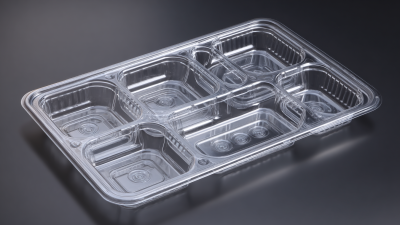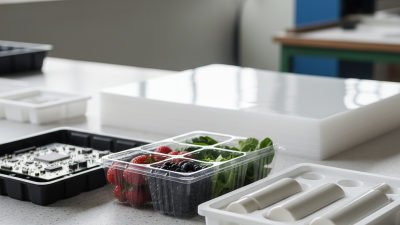
Thermoformed packaging trays are shaped plastic components designed to hold, protect, and present products during storage and transport. Manufacturers heat a plastic sheet until it softens, then draw it over a mold using pressure or vacuum. After cooling, the formed tray keeps its intended shape. Simple in principle.
In practice, tray performance depends on material choice, wall thickness, mold design, and production control. PET, rPET, PVC, and polystyrene may serve different applications, although suitability must be verified for each product. A tray for medical devices needs clean surfaces, secure cavities, and consistent dimensions. A food tray also requires suitable food-contact documentation and controlled manufacturing conditions. These details matter more than appearance alone.
During packaging evaluations, engineers often check fit, impact resistance, stacking behavior, seal compatibility, and mold release. A well-designed cavity can reduce movement around delicate parts. It can also make automated packing more reliable. Yet no tray solves every handling problem. Poor tolerances may create pressure points, while thin sections can deform under heat or load. Real-world testing remains essential.
Sustainability claims deserve careful review. Lightweighting can reduce material use, but recyclability depends on resin type, local systems, labels, and contamination. Recycled content may improve resource efficiency, but supply quality and regulatory requirements still require attention. The details can be inconvenient. Therefore, thermoformed packaging trays should be assessed across their complete use cycle, not judged by one feature. The best choice balances protection, manufacturing practicality, product safety, and responsible end-of-life planning.
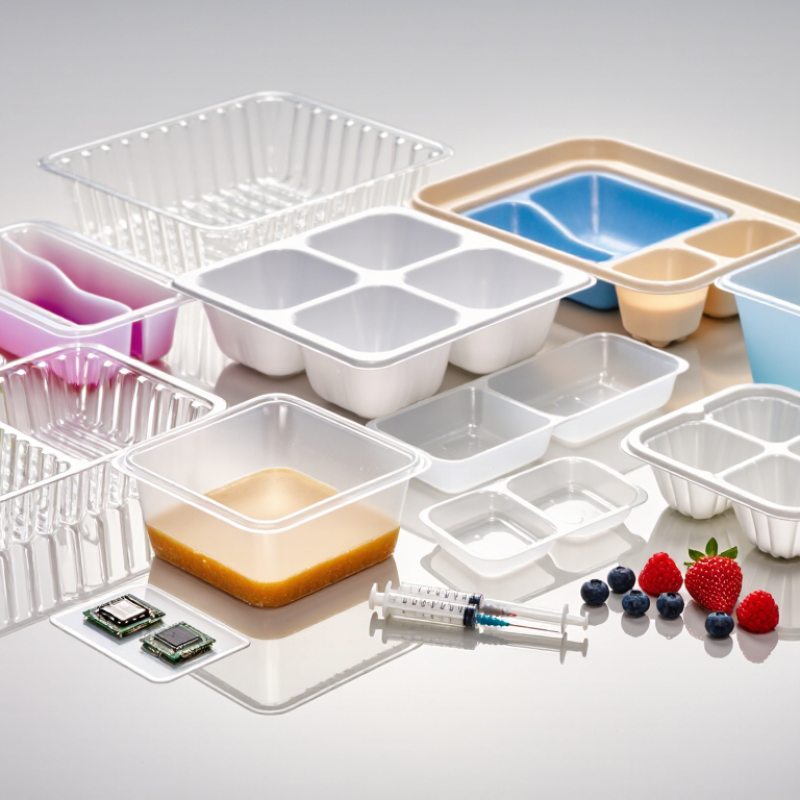
Thermoformed Tray Definition, Structure, and Supply-Chain Function
Thermoformed packaging trays are rigid inserts shaped from heated plastic sheet around a mold. Vacuum pressure or air pressure forms the sheet into precise cavities. After cooling, the tray keeps its molded shape. Common materials include PET, PP, and polystyrene. Material choice depends on stiffness, clarity, temperature resistance, and recycling requirements.
A tray usually contains product cavities, support ribs, a perimeter flange, and draft angles. Cavities hold individual items, while ribs reduce movement during handling. The flange supports sealing, stacking, or automated loading. Small dimensional changes matter. A loose cavity can allow shifting, while a tight cavity may create stress marks. Practical evaluations often include drop tests, vibration checks, compression testing, and repeated loading trials.
The supply chain function extends beyond product protection. Nested trays can reduce storage volume before use. After loading, consistent dimensions help machines pick, place, seal, and inspect products. Stacking patterns also influence pallet stability and warehouse efficiency. Clear identification areas can support traceability without adding separate labels. The design is rarely perfect. Thicker walls improve strength but increase material use and cooling time. Deeper cavities may protect products better, yet they can slow unloading. Temperature changes can also affect fit, especially during long transport. A reliable tray balances protection, manufacturability, handling speed, and actual distribution conditions.
What Are Thermoformed Packaging Trays?
Thermoformed packaging trays begin as flat polymer sheets. The sheet enters an oven and reaches approximately 120–200°C. Exact settings depend on polymer type, thickness, and tray depth. I have found that even a small temperature drift can change the final shape. A sheet that feels evenly softened usually forms more consistently. Operators watch surface gloss, sag, and heating time before forming.
The softened sheet moves over a mold. Vacuum pressure, air pressure, or mechanical assistance pulls it against the mold surface. Sharp corners need careful material distribution. Otherwise, thin spots may appear near the tray base. After forming, cooling stabilizes the geometry. Cooling too quickly can create stress or slight warping. Cooling too slowly can reduce production efficiency. The final stage trims the outer web and separates each tray. Operators inspect edges, depth, wall thickness, and fit with the intended product.
Tips: Keep the sheet temperature uniform across its width. Check mold vents regularly. Small blocked vents can leave soft, incomplete details. Measure trays after cooling, not immediately after trimming. Record each batch. This makes defects easier to trace, although production data does not explain every problem. Sometimes the mold design needs more attention than the heating profile.
| Manufacturing Stage | Primary Operation | Typical Process Conditions | Common Packaging Materials | Key Equipment | Typical Output or Quality Check |
|---|---|---|---|---|---|
| 1. Sheet Preparation | Polymer sheet is inspected, cut or fed from a roll, and positioned for forming. Moisture-sensitive materials may require drying before heating. | Sheet thickness commonly ranges from approximately 0.25 to 3.0 mm for packaging applications. Feed alignment and thickness uniformity are controlled before forming. | PET, recycled PET, PP, HIPS, ABS, PVC, and multilayer barrier sheets. | Sheet feeder, roll stand, thickness gauge, pre-drying unit, and alignment system. | Uniform sheet thickness, clean surface, correct width, and stable feed position. |
| 2. Heat | Infrared, ceramic, or contact heaters soften the sheet until it reaches a formable state without causing excessive degradation or sagging. | Approximately 120–200°C | PET generally requires a higher forming window than some styrenic materials. The exact temperature depends on polymer grade, sheet thickness, heating rate, and mold design. | Multi-zone infrared heater, ceramic heater, temperature controller, and pyrometer. | Even sheet temperature, controlled sag, and sufficient softening for cavity replication. |
| 3. Form | The softened sheet is shaped over or into a mold using vacuum, compressed air, mechanical plugs, or a combination of these methods. | Vacuum is commonly applied through mold vents; plug assistance may be used to improve wall distribution in deep cavities. Forming time is often measured in seconds. | Rigid thermoplastics selected for stiffness, clarity, impact resistance, or barrier performance. | Single- or multi-cavity mold, vacuum pump, air-pressure system, plug assist, and forming press. | Accurate cavity dimensions, defined ribs and corners, acceptable wall-thickness distribution, and minimal webbing. |
| 4. Cool | The formed sheet is cooled against the mold or with controlled air until the polymer is sufficiently rigid to retain its shape during release. | Cooling duration depends on material, wall thickness, mold temperature, and part geometry. Water-cooled molds are frequently used for repeatable cycle control. | PET and PP trays may require careful cooling control because crystallinity, shrinkage, and dimensional stability affect the finished part. | Water-cooled mold channels, air-cooling system, temperature sensors, and cooling controller. | Stable dimensions, reduced warpage, smooth surfaces, and reliable release from the mold. |
| 5. Trim | The formed web is separated from the tray outline, and excess flange or material between cavities is removed. | Trimming may occur inline or in a secondary operation. Cutting clearance and tool condition affect edge quality and dimensional accuracy. | Thermoformed sheet compatible with steel-rule dies, punch tools, routing, or CNC trimming. | Trim press, steel-rule die, punch-and-die set, router, CNC cutting system, or robotic cutter. | Consistent outside dimensions, clean edges, correct flange width, and low burr or particulate generation. |
| 6. Inspection | Finished trays are checked for dimensions, appearance, material defects, and functional fit with the intended product or secondary package. | Inspection frequency may be based on sampling plans or continuous automated vision systems. Critical dimensions should be measured against drawing tolerances. | All thermoformed packaging polymers. | Coordinate measuring equipment, gauges, vision inspection, leak tester, and weighing system. | Verification of cavity size, wall condition, clarity, seal or lid fit, cleanliness, and absence of cracks or pinholes. |
| 7. Nesting and Packing | Approved trays are nested, counted, stacked, and protected from deformation or contamination before shipment or downstream filling. | Stack height and nesting pressure are controlled to prevent sticking, distortion, and difficult separation. | Rigid trays made from PET, PP, HIPS, ABS, PVC, or multilayer sheet structures. | Nesting station, counting system, conveyor, stacking unit, and protective packaging. | Consistent stack count, undamaged edges, clean surfaces, and efficient storage volume. |
Thermoformed trays begin as plastic sheets heated until flexible, then shaped over a mold. They protect products with shallow cavities, raised edges, and fitted lids. Material choice affects clarity, stiffness, sealing, temperature resistance, and end-of-life handling. Resin codes identify the polymer, not automatic recyclability.
PET, resin code 1 offers strong clarity and useful oxygen resistance. It suits visible food, medical components, and retail inserts. PET also has established recycling streams in many regions. However, multilayer structures, labels, and dark colors can complicate sorting.
According to the OECD’s Global Plastics Outlook (2022), only 9% of global plastic waste was recycled in 2019. A clear tray can still be poorly recoverable.
PP, code 5, handles heat better and resists many chemicals. It works well for microwaveable or reusable-style trays, although its stiffness may feel lower than PET.
PS, code 6, is rigid, economical, and easy to form. It can crack under impact and has limited recycling access in numerous markets.
PVC, code 3, provides clarity and toughness, but additives and chlorine chemistry require careful specification and waste management.
UNEP’s Turning off the Tap report (2023) identifies packaging as a major driver of plastic pollution.
My practical preference is simple: select the lowest-impact resin that meets performance needs. That decision is not always obvious. Testing should include drop resistance, sealing, temperature exposure, and actual local recycling conditions.
Thermoformed packaging trays are shaped from heated plastic sheet, then cooled around a mold. Wall thickness commonly ranges from 0.3 to 3 mm. Thin walls reduce material use, but they can flex during stacking or transport. Thicker walls improve rigidity, although they may increase weight and forming time. Small ribs, corners, and draft angles also change real-world performance.
Mechanical testing needs more than a single strength number. Under ISO 527, tensile strength is measured with controlled specimens and defined test speeds. A tray may show strong plastic behavior, yet fail at a sharp corner. In practice, I would test samples from the actual forming process, not only flat sheet. Orientation from stretching can make one direction stronger than another. That detail is easy to miss.
Barrier performance is often checked through oxygen transmission rate, using ASTM D3985. OTR results typically use controlled temperature, humidity, specimen area, and pressure conditions. Lower OTR means less oxygen passes through the tested barrier. It does not automatically predict shelf life. Seals, pinholes, wall variation, and handling damage still matter. Test conditions must be recorded beside every result. Otherwise, comparisons become unreliable. A useful specification might report thickness, material structure, ISO 527 direction, and ASTM D3985 conditions together. Even then, a tray should face drop, compression, and temperature testing before production approval. Real handling is rarely as gentle as the laboratory.
Thermoformed packaging trays are shaped by heating plastic sheet and pressing it over a mould. They hold fresh foods, medical components, and industrial parts. Their compliance depends on the resin, additives, production process, and intended use.
For food contact, FDA requirements focus on authorized substances and safe conditions of use. A supplier should provide composition details, test records, and a food-contact declaration where applicable. Testing should reflect real conditions, including hot filling, freezing, oily foods, and repeated storage periods. EU Regulation 10/2011 requires plastics to use permitted substances and meet specific migration limits. Documentation should also address overall migration, specific migration, and the relevant food simulants. The tray may pass one test and fail another. That detail is easy to miss.
End-of-life planning starts during design. A mono-material tray is generally easier to sort and recycle than a tray with bonded layers, dark pigments, labels, or barrier coatings. However, recyclability is not proven by a material symbol alone. Local collection systems, sorting equipment, and market demand decide what actually happens after disposal. Recycled content may also require separate controls, especially for food-contact applications. Requirements differ across regions and change over time. A practical review should connect the tray specification with current FDA or EU documentation, recycling claims, and disposal conditions. Gaps often appear between laboratory results and real household handling. That gap deserves attention.
Common thermoformed tray polymers have different densities, which can influence sorting and separation in recycling systems. PET/CPET, PP, PS, and PE are widely used tray materials, but a resin identification code does not by itself guarantee that a tray is recyclable in a particular region.
For food-contact use in the United States, compliance depends on the applicable FDA regulation, Food Contact Notification, Threshold of Regulation exemption, or other authorized basis for each material and intended use. In the European Union, plastic food-contact trays must comply with Regulation (EU) No 10/2011, including overall migration and substance-specific migration requirements. The EU overall migration limit is generally 10 mg/dm², subject to the regulation’s conditions and exemptions.
End-of-life performance also depends on tray design, additives, labels, coatings, multilayer structures, collection systems, and local recycling infrastructure.