
(208) 739-9142Monday – Friday 8 AM – 4:30 PM (MST)

10 Best Small Clamshell Packaging Suppliers for Global Buyers

Small clamshell packaging can look simple, yet small design choices affect product protection, presentation, and shipping efficiency. A lid that closes securely, a hinge that survives repeated handling, and a base that stacks neatly can make a real difference. For global buyers, supplier selection also involves practical questions: available materials, customization options, minimum order quantities, sample access, production capacity, and delivery timelines.

This guide introduces ten suppliers for buyers comparing small clamshell packaging options across markets. It focuses on details worth checking before requesting a quote, rather than treating a polished catalog as proof of performance. Ask whether the supplier can provide samples, explain material specifications, and confirm dimensions for your product. If the packaging will hold food, cosmetics, electronics, or small retail items, verify that the proposed design suits the product and its intended use. Requirements differ by destination, so buyers should confirm relevant documentation and packaging expectations for each market.

There is no universal best choice. A supplier with flexible customization may not offer the shortest lead time, while a lower quoted price may exclude tooling or freight. Those trade-offs are easy to miss. Compare like with like, and keep written specifications for dimensions, closure fit, and order quantities. The ten companies below offer a starting point for research, not a substitute for sample checks and direct discussions. A careful comparison can reduce avoidable surprises, though it cannot remove every one.
10 Best Small Clamshell Packaging Suppliers for Global Buyers

Understanding Small Clamshell Packaging and Its Common Uses

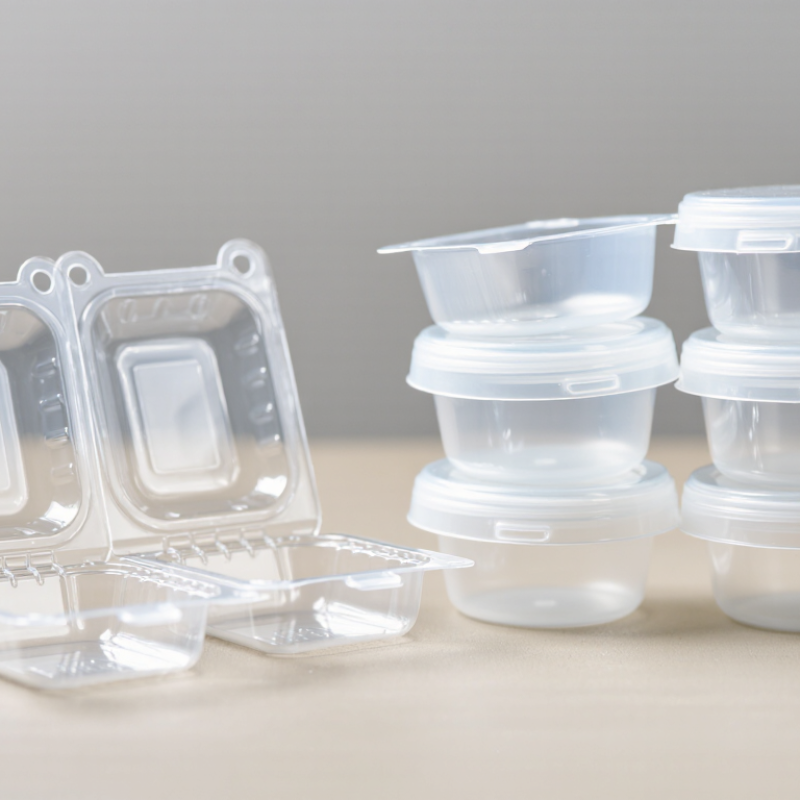
Small clamshell packaging is a clear container with a hinged lid, often secured by a snap closure. Its shape keeps small products visible while helping prevent them from shifting during handling. Buyers commonly use it for screws, craft components, phone accessories, and other lightweight retail items. A molded pocket can hold each piece in place. That detail matters when products are easy to lose or scratch.

Food uses include berries, cut produce, and bakery portions, provided the material is suitable for food contact. Check the supplier’s specifications rather than assuming every clear plastic container is appropriate. Wall thickness, hinge strength, and closure fit affect how well a pack performs on shelves and in transit. A tight closure can help, but it does not make packaging leakproof. Small clamshells also use more material than a simple pouch, so they are not ideal for every product.

Tips: Match the cavity to the item; extra space can cause rattling. Test the closure with the actual product inside. Ask for samples and verify dimensions, material details, and food-contact documentation when relevant. Recycling options vary by location, and clear plastic is not automatically accepted. A little testing now can prevent a frustrating packaging mismatch later.

Criteria for Evaluating Global Clamshell Packaging Suppliers

Global buyers should compare small clamshell packaging suppliers against the same product requirements. Check material type, wall thickness, hinge strength, closure fit, and available sizes. A sample should hold the intended product without rocking or pinching it. Open and close the lid repeatedly; weak hinges often show stress near the fold. Ask for written specifications and quality checks, not only a polished brochure. A brochure proves little.

Production consistency matters as much as a good sample. Request details about inspection frequency, defect handling, and batch traceability. Confirm whether the supplier can maintain dimensions and clarity across repeat orders. For international shipments, review lead times, carton counts, pallet dimensions, and protective packing. Freight delays can turn a low unit price into an expensive choice. Ask how the supplier handles forecast changes, too. That answer may be less polished, but it is useful. Check that packaging documentation supports your destination-market requirements, and verify claims with relevant records.

Tips: Test samples with your actual product and shipping conditions. Compare quotes using the same specifications and delivery terms. Keep one approved sample as a reference for later batches. If a supplier avoids direct questions, pause and investigate. A perfect evaluation sheet is unlikely; record uncertainties before committing.

10 Best Small Clamshell Packaging Suppliers for Global Buyers - Criteria for Evaluating Global Clamshell Packaging Suppliers

Supplier-selection scorecard. The weights below are suggested buyer-set priorities, not ratings or claims about specific suppliers. Score each criterion from 0 to 5 using documented evidence.

# Evaluation criterion Suggested weight Evidence to request How to evaluate
1 Regulatory and food-contact compliance 18% Material declarations, applicable test reports, and documentation for the destination market and intended use. Check that evidence covers the exact material, food type, contact conditions, and market. For example, relevant U.S. requirements may include applicable provisions of 21 CFR; EU food-contact materials are covered by Regulation (EC) No 1935/2004 and plastics by Regulation (EU) No 10/2011.
2 Product and application fit 14% Samples, drawings, dimensions, closure details, and application-specific test results. Confirm the package fits the product, filling process, storage conditions, handling, and required opening or tamper-evidence features.
3 Material and construction transparency 12% Written specification identifying polymer type, colorants, additives, recycled content where applicable, and any labels or coatings. Verify that the specification matches the sample and that any material or recycled-content claims are supported by traceable documentation.
4 Tooling and design capability 10% Tooling ownership terms, design-for-manufacture feedback, prototype process, and mold maintenance plan. Assess whether design revisions, sample approval, tooling responsibilities, and end-of-contract mold access are clearly documented.
5 Quality management and traceability 12% Quality-management certificate where applicable, inspection plan, lot records, nonconformance procedure, and corrective-action examples. Check certificate scope and validity; review how incoming materials, production lots, dimensional checks, and complaints are controlled. ISO 9001 specifies requirements for a quality management system; certification alone does not guarantee a particular product’s quality.
6 Customization and order flexibility 8% Written options for dimensions, color, labeling, decoration, packaging configuration, and minimum order quantities. Compare the options and minimums stated in the quotation; confirm which changes require new tooling or additional approval.
7 Capacity and supply continuity 8% Capacity statement, production-site details, contingency arrangements, and material sourcing plan. Compare documented available capacity with forecast demand and ask how production or material disruptions are managed.
8 Lead-time reliability 6% Quoted production and sampling lead times, stated assumptions, and delivery-performance records where available. Compare like-for-like quoted timelines and clarify when the clock starts, including artwork approval, tooling, and material availability.
9 Environmental claims and end-of-life information 7% Substantiation for recycled-content or environmental claims, material composition, and market-specific disposal guidance. Assess claims against their supporting evidence and the intended market. Resin identification is not, by itself, proof that an item is accepted for recycling in a particular location.
10 Export, logistics, and commercial clarity 5% Quotation with Incoterms® rule and named place, packing details, shipping documents, payment terms, and claims process. Check that responsibilities, costs, delivery location, documentation, and remedies for shortages or defects are unambiguous.
Total suggested weight 100% Weighted score = (criterion rating ÷ 5) × criterion weight. Maximum total: 100 points.

Scoring guide: 0 = no evidence; 1 = very limited evidence; 2 = partial evidence with material gaps; 3 = adequate documented evidence; 4 = strong evidence; 5 = verified evidence that fully meets the buyer’s stated requirements.

Profiles of 10 Small Clamshell Packaging Suppliers

A practical profile of ten small clamshell packaging suppliers should compare capability, not just price. Profiles 1–2 may focus on custom thermoforming for unusual product shapes; 3–4 on short production runs; and 5–6 on clear recycled-content options. Profiles 7–8 can emphasize tooling support and sample speed, while 9–10 may offer regional shipping or multiple material choices. These are useful distinctions, but buyers should verify each supplier’s actual equipment, lead times, and documentation. Small details matter: a hinged lid that snaps shut reliably can prevent damage during handling.

Material claims deserve careful checking. The OECD’s Global Plastics Outlook (2022) reports that global plastic production reached 460 million tonnes in 2019, twice its 2000 level. It also estimates 353 million tonnes of plastic waste that year. This broader industry data does not measure clamshell packaging specifically, but it underlines why buyers should ask for clear material specifications and credible recycled-content evidence. A supplier profile is only as strong as the records behind it. Some claims remain difficult to compare, which is a sourcing weakness worth acknowledging.

Tips: Request a physical sample, test the hinge and closure, and confirm dimensions against the packed item. Ask for written material data, production tolerances, minimum order quantities, and delivery estimates. Check twice.

Comparing Supplier Capabilities, Materials, and Customization

Choosing among small clamshell packaging suppliers means comparing more than unit price. Check whether each supplier can hold consistent dimensions, produce clean hinges, and keep locking tabs aligned across large runs. Small parts matter. A loose lid can open during shipping, while an overly tight one may frustrate customers. Ask for samples made with the proposed material and tooling, not just a polished display sample. PET and recycled PET offer clear product visibility; polypropylene can suit applications needing more flexibility. Material availability and performance vary by supplier, so request specifications and relevant test records before committing.

Customization should solve a real packing or display problem. Suppliers may adjust cavity depth, ventilation holes, label areas, closure strength, or pack dimensions. Some can develop custom tooling, but buyers should confirm setup costs, minimum quantities, and revision timelines in writing. Compare how each supplier handles artwork proofs, color consistency, and sample approval. For international orders, clarify carton counts, pallet dimensions, lead times, and export documentation early. Test samples. A design that looks compact on screen may waste space once cartons are stacked. I would also leave room for one imperfect trial run; early feedback often reveals details that drawings miss.

Typical Density of Common Plastic Clamshell Materials

Material choice is one factor global buyers can compare when evaluating clamshell packaging suppliers. This chart shows typical resin densities; actual values vary by grade, additives, and recycled content. Density alone does not determine packaging performance or sustainability.

How to Select a Supplier for International Orders

For international orders, a strong small clamshell packaging supplier should communicate clearly before production begins. Share the product’s length, width, height, weight, and intended use. Ask for a drawing or sample to confirm the fit. Even a few millimeters can affect closure and handling. Confirm material options, case quantities, production lead times, and how cartons will be packed for shipment.

Compare suppliers on more than unit price. Request a written quotation that separates tooling, sample, packaging, and freight costs. Check whether the supplier can provide consistent specifications and production updates. Ask how defects are recorded and resolved. A polished quotation is not proof of reliable service; sample quality and clear answers matter more. It is easy to overlook communication delays until a shipment is already in progress.

Tips: Approve a physical sample before placing a large order. Confirm carton dimensions, pallet details, and shipping terms in writing. Keep a small allowance for transit delays. Plans can still slip. If a supplier’s answers are vague, ask one more question before committing.

Go to Top