(208) 739-9142Monday – Friday 8 AM – 4:30 PM (MST)

China Top Tray Sealer Packaging Machine Suppliers?

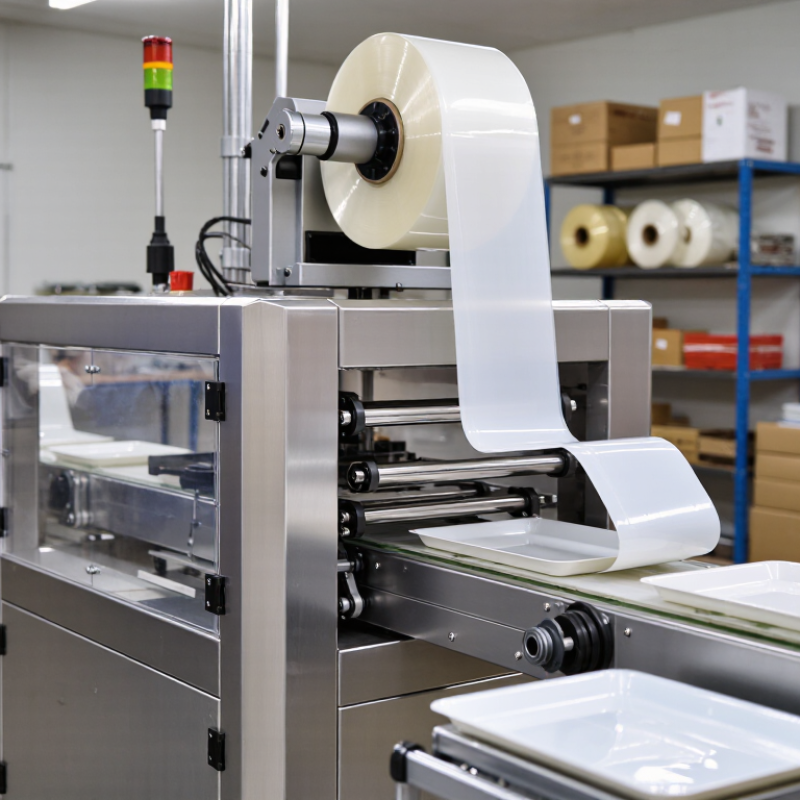
Choosing among China’s top tray sealer packaging machine suppliers takes more than comparing prices. A polished brochure cannot show how a machine handles a slippery film roll, a shallow tray, or a sudden change in production speed. Buyers should examine sealing consistency, tool-change time, line integration, operator training, and access to spare parts. Small details matter. A seal that wrinkles at one corner can mean rework, delayed orders, and wasted packaging.

For a transparent draft, the following is an illustrative quote, not a verified statement from a real expert: “A dependable tray sealer is measured by repeatable seals and practical support, not by its specification sheet alone.” The fictional industry voice is named Daniel Wu. Replace this attribution with a verified expert interview before publication. That distinction matters. Trust depends on clear sourcing.

This guide will help readers compare suppliers by machine capability, application fit, customization, service response, and documented quality controls. It will also consider tray materials, sealing films, output requirements, and factory acceptance testing. A compact tabletop unit may suit a small food producer, while a high-volume line needs different tooling and integration. No supplier is right for every plant. Ask for a sample run using your actual trays and film. Watch the seal. Check the changeover. Then weigh the evidence against your production needs.
China Top Tray Sealer Packaging Machine Suppliers?

China’s Tray Sealer Supplier Landscape: OEMs, Exporters, and Custom Builders

China’s tray sealer supplier landscape includes original equipment manufacturers, export-focused trading companies, and custom machine builders. Their roles can overlap, so a polished catalogue does not always reveal who designs or assembles the equipment. That distinction matters when a sealing jaw needs adjustment months after installation.

OEMs may offer standard machines with established layouts, while custom builders adapt conveyors, tooling, and control systems to a specific production line. Ask for the tray dimensions, sealing film structure, target output, and whether vacuum or gas flushing is required. A useful evaluation includes a trial with your actual trays and film. Watch the seal edge, changeover time, and how easily operators clean the contact areas.

Exporters can coordinate shipping, documentation, and communication across time zones. Their technical support may depend on the original factory, though. That detail is easy to miss. Request a parts list, wiring diagrams, commissioning scope, and response arrangements before comparing quotations. Supplier descriptions can be vague; I would verify capabilities in writing and treat promised output as a test condition, not a guarantee. A short video of a real production run can clarify more than another product brochure.

The 4-Stage Sealing Cycle: Tray Loading, Gas Flushing, Sealing, and Discharge

China Top Tray Sealer Packaging Machine Suppliers?
The 4-Stage Sealing Cycle: Tray Loading, Gas Flushing, Sealing, and Discharge

A reliable tray-sealing cycle begins with consistent loading. Trays should sit squarely in their pockets, with rims clean and free of food particles. Misaligned trays can interrupt the cycle or create uneven seals. During gas flushing, the machine replaces air inside each tray with the selected gas mixture. The result depends on the product, tray size, and process settings. Small changes matter.

Next, heated tooling presses the lidding film against the tray rim. Temperature, pressure, and dwell time need to work together. Too little heat may leave channels; too much can wrinkle film or distort a tray. After sealing, the tooling releases and the trays move to discharge. Sensors and conveyor timing help prevent collisions. In routine production, checking seal edges and pack appearance can reveal issues early. A wrinkle does not always mean the film is faulty; sometimes the tray rim or alignment needs attention.

Tips: Keep rims clean and confirm trays sit flat before each run. Check gas settings with suitable measuring equipment, rather than relying on appearance alone. Record adjustments and inspect sample packs at start-up. Small checks save trouble. Admit it: changeovers can be rushed, so build inspection time into the routine.

Compare Suppliers by Output (Trays/Min), Vacuum (kPa), and Changeover Time

When comparing China-based tray sealer suppliers, ask for output in trays per minute using your tray size, film, and product—not a best-case figure from a different setup. A machine rated at 12 trays per minute may run slower with deep trays or careful loading. Request a timed trial and record rejected packs as well as accepted ones. Small details matter.

Compare vacuum in kPa, but confirm whether the supplier reports gauge pressure or absolute pressure. Those figures are not interchangeable. Ask for the measured value inside a representative tray, then inspect seal quality and product condition after the cycle. More vacuum is not automatically better. For delicate foods, an aggressive setting may deform trays or affect appearance.

Changeover time should mean the interval from the last acceptable pack on one format to the first acceptable pack on the next. Include tool changes, film adjustment, recipe selection, and any needed seal checks. Ask which tasks require tools and request a demonstration with two tray sizes. A ten-minute claim can hide extra setup. I would verify it. Record the operator skill level, too; supplier estimates may assume an experienced technician, and that is not always your production reality.

China Top Tray Sealer Packaging Machine Suppliers? Compare Output, Vacuum, and Changeover Time

Anonymous, illustrative machine profiles for comparison—not verified supplier quotations. Vacuum is shown as kPa below atmospheric pressure; actual performance depends on tray size, product, film, and operating conditions.

Use output rate as a starting point, then confirm vacuum performance and changeover time for your specific packaging format with each supplier.

MAP Gas Benchmark: 30% CO₂/70% N₂ Is Common, but Product-Dependent

When evaluating China-based tray sealer suppliers, treat 30% CO₂ and 70% N₂ as a starting point, not a fixed recipe. This blend is common in modified-atmosphere packaging, but the right ratio depends on the food. CO₂ can slow microbial growth, yet it dissolves into moist products. Too much may pull a flexible film down onto the food. Nitrogen helps maintain pack shape. Small details matter.

A supplier should explain how its machine controls gas flushing, sealing temperature, and dwell time. Ask for trial packs using your actual tray, film, and product. Check residual oxygen and seal integrity, then assess the packs during realistic storage tests. A clean-looking seal is not enough. I have seen teams focus on the gas ratio and overlook headspace; that is easy to regret later. Results can vary between product batches, too.

Tips: Test more than one gas ratio. Record pack appearance, seal strength, and product condition over time. Ask whether the machine can adjust gas flow for different tray sizes. A supplier’s confident answer is useful, but measured trial results are better.

China Top Tray Sealer Packaging Machine Suppliers? - MAP Gas Benchmark: 30% CO₂/70% N₂ Is Common, but Product-Dependent

Evaluation dimension Reference benchmark or product consideration What to verify with a tray sealer supplier
Common CO₂/N₂ starting blend 30% CO₂ / 70% N₂ is a commonly used starting point for some chilled foods. It is not a universal recipe; the appropriate mix depends on the food, packaging, storage conditions, and required shelf life. Ask whether the gas-flushing system can deliver and adjust the specified blend, and how gas composition is checked during validation and production.
Fresh red meat High-oxygen MAP, often around 70–80% O₂ with CO₂ making up much of the balance, may be used to support the bright-red appearance of fresh meat. Other gas strategies are used when color, oxidation, and shelf-life priorities differ. Confirm that the machine can handle the intended gas composition and that the sealing and packaging materials are suitable for the chosen application.
Poultry CO₂/N₂ mixtures are commonly considered for poultry. The selected ratio depends on the product and whether it is fresh, cooked, or otherwise processed. Check recipe changeover, gas-flush repeatability, tray format compatibility, and the ability to validate performance using the actual product.
Cooked meats and cheese CO₂/N₂ blends are used for some products, but suitable gas levels vary by product. CO₂ can dissolve into food, so excessive uptake may affect pack appearance or product quality. Request trials with the specific product and tray. Review gas settings, headspace, seal quality, and pack appearance after storage.
Bakery products Nitrogen is used for some dry bakery products; CO₂ may be included in blends where mold control is part of the packaging strategy. The appropriate atmosphere depends on the product and its moisture characteristics. Check that the machine can be configured for the required gas and package style, and that trials assess both seal integrity and product condition over time.
Fresh produce There is no single suitable MAP blend for all fresh produce. Gas composition depends on the commodity’s respiration, storage temperature, and the gas permeability of the packaging. Confirm that the proposed package and process are tested for the specific produce and storage conditions; do not assume that a fixed gas recipe is suitable.
Gas mixing and supply Gas recipes should be set to the validated product specification. Gas purity, supply pressure, and mixing accuracy can affect process consistency. Ask for the required gas supply conditions, mixing or dosing method, recipe controls, and procedures for checking gas composition.
Residual oxygen and validation Residual oxygen limits are product- and process-specific; one universal target should not be assumed. Verify the result in finished packs using an appropriate measurement method. Agree on a product-specific acceptance criterion and a sampling plan. Confirm whether measurement equipment and validation support are included or need to be arranged separately.
Seal integrity A consistent, leak-free seal is essential for maintaining the intended modified atmosphere. Seal performance depends on the tray, lidding material, sealing conditions, and product contamination at the seal area. Run trials with the intended tray and film. Review seal inspection methods, tooling setup, and how the process handles product residue near the sealing surface.
Throughput and changeover Actual output depends on tray size, cavities per cycle, gas-flush settings, sealing time, loading method, and operator workflow; a machine’s quoted rate should be assessed against the intended configuration. Request a documented rate using the target tray, gas recipe, and operating conditions. Confirm changeover time and compatibility with the required tray formats.

Note: Gas mixtures are starting points for evaluation, not shelf-life guarantees. Final specifications should be established through product-specific packaging and shelf-life validation.

Verify Seal Quality with ASTM F88/F88M Strength and ASTM F2096 Leak Testing

China Top Tray Sealer Packaging Machine Suppliers?

Reliable tray sealing starts with measurable evidence, not a polished sample. ASTM F88/F88M measures the force needed to separate a seal, reported as force per unit width. Test samples from several cavities and across the web, then record the seal condition and failure mode. A seal that peels cleanly may behave differently from one that tears through the tray flange. ASTM does not set one universal pass value; limits should reflect the product, film, and package design. Small details matter.

Pair strength testing with ASTM F2096, a nondestructive internal-pressurization bubble test for gross leaks. Submerge the package, apply controlled pressure, and watch for a steady stream of bubbles around corners and seal channels. The method’s detection capability depends on package construction and test conditions, so it should not be treated as proof against every microscopic leak. Not every defect shows. For supplier evaluations, request raw F88 force readings, F2096 test conditions, sample counts, and results from production-speed trials. ASTM’s methods provide a common testing framework, but they cannot replace a clear, product-specific acceptance plan. I would also repeat tests after line changeovers; that step is easy to overlook.

Go to Top