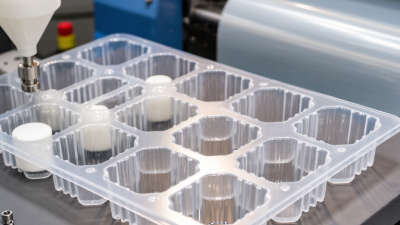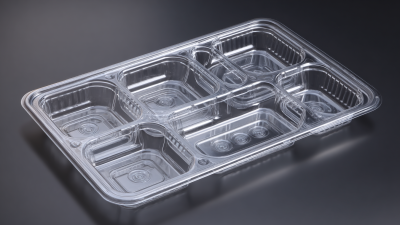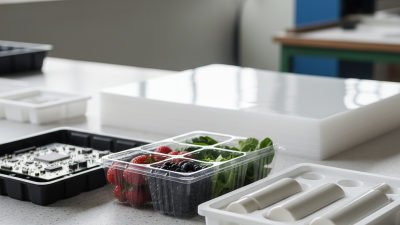
Thermoformed packaging trays support product protection, presentation, and efficient handling across food, electronics, medical, and consumer goods markets. Their value is practical. A well-designed tray can reduce movement, simplify stacking, and protect delicate surfaces during transport. It can also improve automated filling and inspection processes.
Industry data confirms this market’s expanding role. Grand View Research estimated the global thermoformed plastics market at approximately USD 49.4 billion in 2023. Its report also projects continued growth through 2030, supported by food packaging, healthcare, and lightweight material demand. Smithers’ packaging outlook highlights similar pressures, including material efficiency, recyclable structures, and higher manufacturing productivity. These trends are reshaping expectations for thermoformed packaging trays. Cost alone is no longer enough.
This guide examines the Top 10 Thermoformed Packaging Tray Manufacturers Worldwide. The comparison considers production capacity, tooling expertise, material options, quality systems, customization, sustainability practices, and regional service coverage. It also considers real manufacturing details, such as cavity consistency, edge quality, nesting performance, and delivery reliability. These factors affect performance on an actual production line.
A practical caution matters. Market rankings can change quickly. Public company data is not always consistent, and some manufacturers disclose limited capacity information. Therefore, this selection should support supplier research, not replace technical audits or sample testing. Buyers should verify certifications, recycled-content claims, food-contact suitability, and total landed cost before making a decision. Small details matter. A tray that looks efficient may still create waste, jams, or costly tooling revisions.
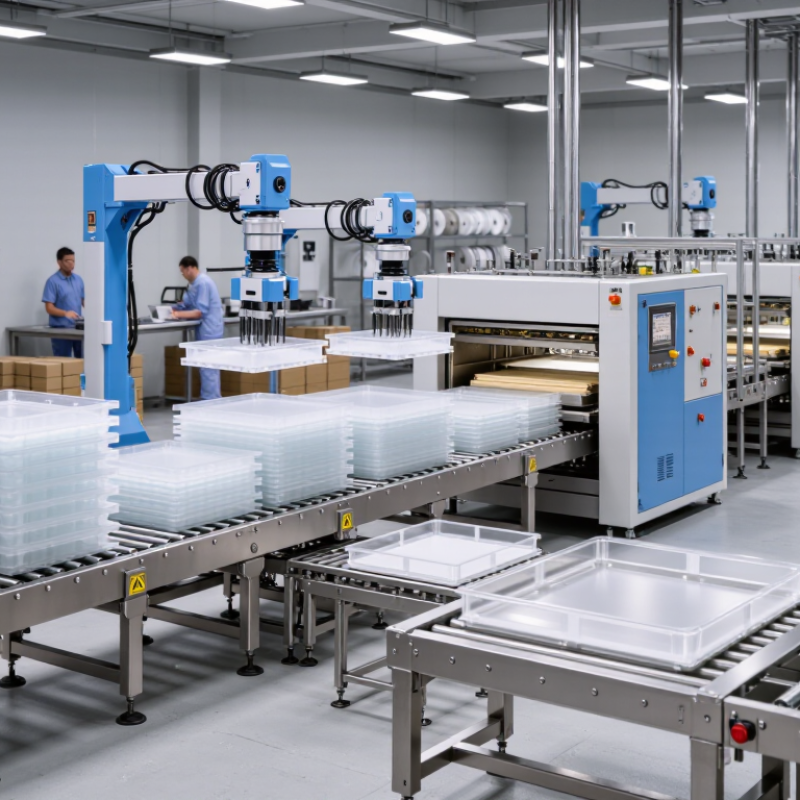
Thermoformed packaging trays are rigid containers shaped from heated plastic sheets. Heat softens the sheet, while vacuum or air pressure pulls it over a mould. The tray then cools, separates, and receives edge trimming. It is not simple. Temperature, sheet thickness, and mould accuracy control the final result.
These trays protect fruit, electronics, medical devices, and prepared foods. Their clear walls can improve product visibility, while formed cavities prevent movement during transport. Grand View Research valued the global thermoformed plastics market at approximately USD 15.8 billion in 2023. Its analysis also identifies packaging as a major application segment. That demand reflects practical needs: lighter packs, automated filling, and consistent dimensions.
Manufacturers commonly use vacuum forming, pressure forming, and plug-assist forming. Vacuum forming suits simpler shapes and lower tooling costs. Pressure forming creates sharper details and tighter tolerances. Plug-assist methods distribute material more evenly across deep cavities. Polyethylene terephthalate, polystyrene, polypropylene, and recycled sheet materials are widely considered. Smithers’ industry analysis reports continued growth in thermoformed packaging, supported by food and healthcare applications. However, “recyclable” does not always mean easily recyclable. Mixed materials, labels, pigments, and food residue can complicate sorting. I would question any design that ignores local recovery systems. Small details matter. A tray may perform well on the production line, yet fail after disposal.
Ranking the top ten thermoformed packaging tray manufacturers requires more than comparing annual revenue. The assessment should begin with verified production experience, technical capability, and consistent quality records. Factory audits can reveal practical details, including forming accuracy, tool change time, and cleanroom discipline. A reliable supplier should maintain tight dimensional control across long production runs. Small errors can affect stacking, sealing, or automated filling.
Material expertise also deserves significant weight. Leading manufacturers should demonstrate safe handling of recycled, recyclable, and barrier materials without weakening tray performance. Independent compliance documents, laboratory test results, and traceable batch records strengthen their authority. Reviewers should examine puncture resistance, heat tolerance, seal integrity, and storage performance under realistic conditions. Customer references are valuable, especially when they describe delivery reliability during demand changes. This evidence often says more than polished marketing claims.
The ranking should also measure engineering support, tooling design, production capacity, and geographic responsiveness. A strong manufacturer can recommend wall thickness, draft angles, and nesting patterns that reduce waste and transport volume. Sustainability claims need measurable data, not vague promises. The method is not flawless. Public information may be incomplete, and one company may perform better in medical packaging than food trays. For that reason, scores should combine audited evidence, independent testing, customer experience, and transparent assumptions. Safety, consistency, and documented performance should outweigh impressive scale alone.
The leading North American manufacturer focuses on retail trays, using PET, RPET, and HIPS for clear product presentation. Its strength is rapid tooling, though recycled-content consistency can still challenge production teams. A German producer serves electronics and industrial buyers with tight tolerances and antistatic options. Engineers typically inspect flange dimensions, corner radii, and stacking performance. Small errors matter.
A Japanese manufacturer is known for clean forming lines and precise cavity control. Its trays suit delicate components and automated packing equipment. A South Korean supplier combines high-speed thermoforming with color matching for consumer goods. An Italian producer emphasizes premium food and cosmetic presentation, including smooth edges and polished surfaces. A French manufacturer often develops recyclable mono-material trays, but practical recycling access may differ by region. A British supplier supports short production runs and custom prototypes, helping buyers test fit before ordering large volumes.
A Chinese manufacturer offers broad capacity, competitive tooling, and multiple material choices for export packaging. Quality depends heavily on process control and inspection records. An Indian producer serves pharmaceutical and healthcare packaging with controlled environments and documented batch checks. A Southeast Asian manufacturer benefits from regional logistics and supplies trays for electronics and food processing. A Nordic producer prioritizes lightweight designs, lower material use, and responsible sourcing. These ten profiles show different strengths rather than one universal standard. Buyers should verify certifications, food-contact suitability, dimensional reports, and real production samples before selection. Even impressive factory claims need independent review.
| Rank | Anonymous Manufacturer Profile | Primary Operating Region | Core Tray Applications | Common Thermoforming Materials | Typical Production Capability | Customization Strengths | Quality and Compliance Focus | Typical End Markets |
|---|---|---|---|---|---|---|---|---|
| 1 | Manufacturer Profile 01 | North America and international export markets | Medical device trays, protective inserts, electronics trays | PET, PETG, HIPS, ABS, PP and recycled-content sheet | High-volume forming with automated trimming and stacking | Precision cavities, nesting features, tamper-evident designs and custom colors | ISO 9001-oriented quality systems; dimensional inspection and lot traceability | Medical, electronics, industrial and consumer products |
| 2 | Manufacturer Profile 02 | Western Europe with multinational supply coverage | Food trays, bakery trays, produce trays and ready-meal containers | rPET, PET, PP and barrier-compatible multilayer sheet | High-speed inline thermoforming for repeat production programs | Modified-atmosphere packaging compatibility, sealing flanges and lightweighting | Food-contact documentation, hygiene controls and batch traceability | Food processing, retail and foodservice |
| 3 | Manufacturer Profile 03 | East Asia with regional and overseas distribution | Consumer electronics inserts, component trays and export packaging | HIPS, ABS, PET, PS and antistatic or conductive sheet | Multi-cavity forming with CNC tooling and automated finishing | ESD protection, tight tolerances, intricate pockets and robotic handling compatibility | Process validation, incoming-material inspection and dimensional controls | Electronics, semiconductors, appliances and industrial components |
| 4 | Manufacturer Profile 04 | Central and Northern Europe | Pharmaceutical trays, surgical-device packaging and laboratory consumable trays | PETG, PET, PP and medical-grade polymer sheet | Small-to-large format forming with controlled clean production areas | Product immobilization, peelable-lid compatibility, sterile-barrier support and validation tooling | ISO 13485-related manufacturing practices, risk assessment and documented change control | Medical devices, diagnostics and pharmaceutical packaging |
| 5 | Manufacturer Profile 05 | North America with domestic and cross-border service | Automotive component trays, material-handling trays and reusable dunnage | HDPE, PP, ABS, HIPS and impact-modified sheet | Large-format forming with CNC trimming and reusable-packaging programs | Stacking and nesting geometry, reinforced ribs, forklift compatibility and return logistics | Automotive supplier quality procedures and documented dimensional verification | Automotive, aerospace, industrial equipment and logistics |
| 6 | Manufacturer Profile 06 | Southern Europe and Mediterranean markets | Fresh-food trays, meat and seafood trays, deli trays and produce packaging | rPET, PET, PP and recyclable mono-material structures | Continuous forming and high-output trimming for retail packaging | Lightweight wall sections, drainage features, stackability and sealing performance | Food-contact compliance, hygiene monitoring and recycled-content documentation | Food processing, supermarkets and catering suppliers |
| 7 | Manufacturer Profile 07 | South Asia with export-oriented production | Retail blister inserts, cosmetic trays, stationery trays and promotional packaging | PVC alternatives, PET, HIPS, PP and biodegradable or compostable sheet options | Short- and medium-run production with rapid tool-change capability | Transparent presentation, embossed logos supplied by customers, folding integration and retail-ready formats | Material certification, visual inspection and production sample approval | Retail, cosmetics, consumer goods and promotional products |
| 8 | Manufacturer Profile 08 | United Kingdom and wider European market | Industrial component trays, warehouse picking trays and custom handling systems | ABS, HIPS, HDPE, PP and recycled polymer sheet | Prototype-to-production service with vacuum forming and pressure forming | Low-volume customization, ergonomic handling, protective padding interfaces and rapid prototyping | Design-for-manufacture reviews, first-article inspection and controlled revision management | Industrial manufacturing, engineering and distribution |
| 9 | Manufacturer Profile 09 | Australia, New Zealand and Asia-Pacific supply chains | Agricultural produce trays, seafood trays, foodservice trays and export packaging | PET, rPET, PP and food-contact PS alternatives | Regional production supported by custom tooling and contract manufacturing | Cold-chain suitability, drainage, crush resistance and efficient pallet utilization | Food-contact declarations, hygiene procedures and transport-performance testing | Agriculture, seafood, food processing and hospitality |
| 10 | Manufacturer Profile 10 | Latin America with regional export capabilities | Food trays, pharmaceutical inserts, retail packaging and industrial trays | PET, rPET, PP, HIPS and ABS | Custom thermoforming from prototype quantities to repeat production | Tooling optimization, nesting efficiency, custom compartment layouts and recyclable designs | Documented quality inspection, material traceability and customer-specific specifications | Food, healthcare, retail, agriculture and general industry |
| Note: Manufacturer names and brand-specific information are intentionally omitted. Capability descriptions represent established thermoformed-tray manufacturing practices and commonly disclosed industry specifications; exact materials, certifications, dimensions and production volumes vary by facility and customer program. | ||||||||
Leading thermoformed tray manufacturers distinguish themselves through material control, not attractive samples alone. PET and rPET offer clarity and useful stiffness for food, medical, and electronics applications. Polypropylene handles heat better, while HIPS supports economical impact protection. For sensitive products, multilayer films can add oxygen or moisture barriers. Material choice matters. Recycled content may reduce impact, but it can also change color, forming behavior, and consistency. Experienced manufacturers document resin sources, drying conditions, and batch performance before production.
Customization begins with the product geometry. Engineers adjust cavity depth, corner radii, wall thickness, vents, and stacking features. A small radius can prevent tearing around a sharp medical component. Tooling may use aluminum for production stability or lower-cost prototypes for early trials. Samples are essential. Practical testing should include drop checks, compression, heat exposure, seal compatibility, and fit after transport. Drawings alone rarely reveal friction between a tray and automated equipment.
Production capability separates a capable supplier from a catalog seller. Review forming size, press capacity, cycle control, trimming accuracy, and inspection records. Automated vision systems can detect missing cavities, warped edges, or incomplete cuts. Manual inspection still matters. Lead times depend on tooling, resin availability, color, packaging, and requested tolerances. Some manufacturers promise aggressive schedules, yet rushes can hide weak validation. A reliable partner shares trial data, corrective actions, and realistic capacity limits. Ask for measurable evidence. Supplier comparisons should include total yield, not only unit price.
Thermoformed tray manufacturing is becoming more regional, data-driven, and closely tied to sustainability targets. The leading ten manufacturers worldwide compete across food, healthcare, electronics, and industrial packaging. Their capabilities differ in mold precision, cleanroom control, recycled content, and delivery speed. A tray may look simple. It is not.
European markets often emphasize recycled content, lightweighting, and documented circularity. North American buyers commonly prioritize food safety, automation, and dependable domestic supply. Asian production hubs offer scale and flexible tooling, while emerging markets seek affordable equipment and stronger material recovery systems. These patterns are changing quickly. They are not universal.
Sustainability begins during design. Thin-wall PET, rPET, PP, and mono-material structures can reduce material use when performance remains adequate. Clear labeling helps consumers sort trays correctly. Local collection capacity matters just as much. A recyclable tray has limited value where recycling access is weak. Manufacturers with verified life-cycle data, traceable resin sources, and practical end-of-life testing deserve closer attention. Third-party audits improve confidence, but audits cannot replace factory experience. Buyers should compare energy use, scrap rates, mold changeover time, and transport distance. Small details affect the final footprint. No ranking is perfect. Some “green” claims still need tougher evidence. The strongest suppliers keep improving, even when the numbers look less impressive.