Thermoformed plastic trays protect products, organize components, and keep production lines moving. In China, manufacturers vary widely in tooling skill, material choices, and quality controls. A tray may look simple. Its rim, wall thickness, and corner radius still matter. They affect stacking, sealing, handling, and product protection.
Thermoforming specialist Dr. James L. Throne’s work offers a useful principle: “Successful forming depends on matching heat, material, and process conditions.” This is a paraphrase, not a verified verbatim quotation. It captures why buyers should look beyond attractive samples. Ask how suppliers control sheet thickness, inspect molds, and test trays across production runs. Request specifications and sample records. Details matter.
This guide introduces leading Chinese manufacturers of thermoformed plastic trays and the questions worth asking before choosing one. It considers product range, customization, production capability, communication, and documented quality practices. Buyers should also confirm that materials and intended uses meet the requirements of their destination markets. A polished catalog is not proof. Nor is a low quote proof of poor quality. Compare evidence, clarify tolerances, and check whether the supplier can repeat the same result at scale. Some details may remain uncertain until samples are tested under real handling conditions. That is worth acknowledging. The right partner is not simply the factory with the biggest capacity; it is the one that can explain its process and deliver consistent trays for your application.

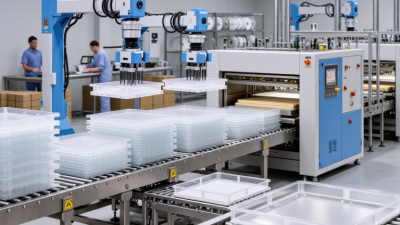
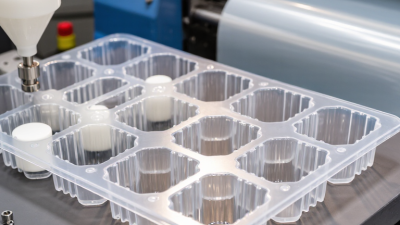
Thermoformed tray production in China combines sheet extrusion, controlled heating, vacuum or pressure forming, and trimming. The sequence looks simple; consistency is not. Small temperature shifts can thin corners, distort rims, or make trays stack poorly. Buyers should inspect wall-thickness records, flange flatness, nesting tests, and batch controls—not just sample appearance. A sample can look excellent while a long production run drifts.
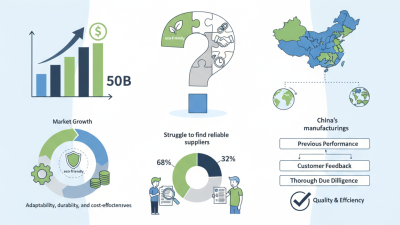
Grand View Research valued the global thermoformed plastics market at USD 49.9 billion in 2022 and forecast a 5.2% compound annual growth rate from 2023 to 2030. This covers thermoformed plastics broadly, not China-made trays alone. It indicates industry growth, but should not be mistaken for a tray-specific market estimate.
The OECD’s Global Plastics Outlook (2022) reports that packaging accounted for 40% of global plastic waste in 2019. That makes lightweighting and material selection practical manufacturing concerns. Chinese suppliers may offer PET, PP, HIPS, or recycled-content options, depending on product requirements. Ask for material declarations and repeatable compression or drop-test results. One limitation: some factories provide test data from a single production run. Compare multiple lots and document the gaps.
When evaluating Chinese thermoformed tray manufacturers, inspect more than glossy samples. Ask for material specifications, sheet-thickness tolerances, and batch-level quality records. A tray that looks sturdy may warp under a sealing plate or crack at a sharp corner. Test samples on your own filling and packing line.
The OECD’s Global Plastics Outlook (2022) reports that packaging accounts for about 40% of plastic waste. That figure makes material choices and waste controls worth checking carefully. Ask whether recycled-content claims are supported by traceable records, and request documented food-contact test results where relevant. Numbers matter. A vague “eco-friendly” label is not evidence.
Review tooling capability, production capacity, and delivery performance using recent order records, not promises alone. Check the edges. Compare tray dimensions across samples from different production runs, then test stacking, seal integrity, and transport damage. A factory visit can reveal whether operators measure products routinely or only before audits. I would still question any perfect-looking report: sampling methods and rejected batches matter too. A capable supplier should explain deviations plainly, share corrective actions, and provide a realistic plan for maintaining consistent quality.
Leading thermoformed plastic tray manufacturers in China combine practical tooling knowledge with steady production control. They shape heated plastic sheets over custom molds, then trim each tray to fit its intended product. The process suits packaging for electronics, food, medical supplies, and industrial components, though requirements vary widely. A reliable manufacturer asks about product weight, stacking height, storage conditions, and transport before proposing a design.
Look beyond a polished sample. Ask how the supplier checks wall thickness, edge quality, dimensions, and fit across production batches. Request a prototype before approving tooling, and test it with the actual product. Small details matter: a shallow rib can reduce flex, while a rough edge may complicate packing. Material options, mold ownership, lead times, and minimum order quantities should be confirmed in writing. Clear answers are a good sign.
Not every tray needs a complex mold. Sometimes a simpler design works better. Still, early samples do not always reveal long-run variation, so discuss inspection frequency and corrective steps. Review relevant quality records and, where possible, visit the production site or arrange an independent audit. Communication can be imperfect; technical drawings may need revision after the first trial. That is normal, but unresolved changes should not be treated as approved specifications. A capable manufacturer can explain trade-offs without promising that every design is easy or inexpensive.
This comparison outlines common capabilities and materials used by thermoformed tray manufacturers. It is an industry overview, not a ranking of named companies; actual specifications and compliance should be confirmed with each supplier.
| Comparison Dimension | Common Industry Capability | Typical Materials or Processes | What Buyers Should Verify |
|---|---|---|---|
| Food packaging | Production of trays for fresh produce, bakery goods, meat, seafood, and prepared foods. | PET, rPET, PP, and other food-packaging sheet materials; formed trays may be designed for lidding or film sealing. | Intended-use suitability, food-contact documentation for the destination market, sealing compatibility, and traceability. |
| Material selection | Selection of sheet based on clarity, stiffness, impact performance, temperature requirements, and end use. | PET is often chosen for clarity; PP is used where greater heat tolerance may be required; CPET is used in some ovenable food trays. | Resin type, sheet thickness, recycled content, temperature limits, and test results for the finished tray. |
| Forming methods | Heating plastic sheet and forming it over or into a mold; trimming is generally part of the production sequence. | Vacuum forming, pressure forming, and matched-mold forming, selected according to part design and production needs. | Part tolerances, wall-thickness distribution, trimming quality, production samples, and process controls. |
| Custom tooling | Mold design and fabrication for product-specific dimensions, cavities, ribs, and stacking features. | Prototype or production tooling; mold material and construction vary with design, output, and required service life. | Tooling ownership, sampling and approval steps, revision handling, lead time, and maintenance responsibilities. |
| Recycled-content options | Some manufacturers can source or process sheet containing recycled plastic, subject to material availability and end-use requirements. | rPET is commonly used in packaging applications; the suitability of recycled material depends on the application and applicable rules. | Recycled-content percentage, chain-of-custody evidence, appearance requirements, and food-contact eligibility where relevant. |
| Quality control | Inspection may cover dimensions, appearance, forming defects, trimming, and packaging condition. | Incoming sheet checks, in-process inspection, finished-part sampling, and documented corrective actions. | Inspection criteria, sampling plan, measurement records, defect limits, and handling of nonconforming products. |
| Export readiness | Export-oriented suppliers may support specification documents, export packing, and shipment coordination. | Carton or pallet packing is selected to protect trays and suit the order and shipping method. | Packaging specification, product and carton dimensions, shipping terms, required documents, and sample approval. |
Note: Material performance and regulatory requirements depend on the specific formulation, tray design, conditions of use, and destination market.
Thermoformed plastic trays are selected by matching the material to the product and its handling conditions. PET and recycled PET offer clear visibility for retail packaging, while polypropylene can suit applications needing greater heat resistance. HIPS is often used for lightweight, rigid inserts. No material is ideal for every job. A clear tray may show products well but can reveal scratches, dust, or uneven edges.
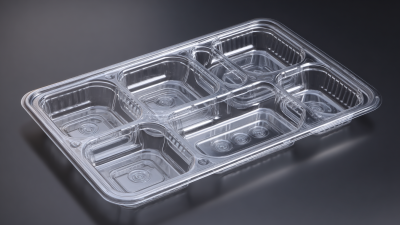
Design details affect both protection and production. Deep cavities need suitable draft angles so parts release cleanly from the mold. Rounded corners can reduce stress points, while a reinforced rim helps trays keep their shape during stacking. For delicate components, separate pockets limit movement; for produce, ventilation openings may help airflow. Small details matter. A tight fit can still make packing slower if workers struggle to lift the product out.
In China, thermoforming manufacturers commonly develop trays for food, electronics, consumer goods, and industrial parts. Useful discussions with a supplier cover sample dimensions, wall thickness, stacking height, and expected transport conditions. A tray that looks good on a drawing may flex after loading, so test samples with the real product and packaging process. That step can take extra time, but skipping it is a risk worth reconsidering.
China’s thermoformed tray suppliers should be compared on process control, not catalog photos alone. Check forming method, press dimensions, mold ownership, and material options. Ask for a production sample made with the proposed resin and tooling. Measure wall thickness at corners and bases, where uneven forming can weaken a tray. Request documented checks for dimensions, appearance, and batch consistency.
Grand View Research’s Thermoformed Plastics Market report estimated the global market at USD 49.9 billion in 2023, with a projected 5.4% compound annual growth rate from 2024 to 2030.
This covers a broad product category, not Chinese trays specifically. It signals a competitive market, but does not prove any supplier’s capacity. Ask for recent output records, machine lists, and realistic lead times, then verify details during a factory audit or live video walkthrough. Paper claims are easy.
One limitation remains: a sample confirms fit, not stable performance across a full production run. Request trial-run data, material certificates, and corrective-action records before approving volume orders.